
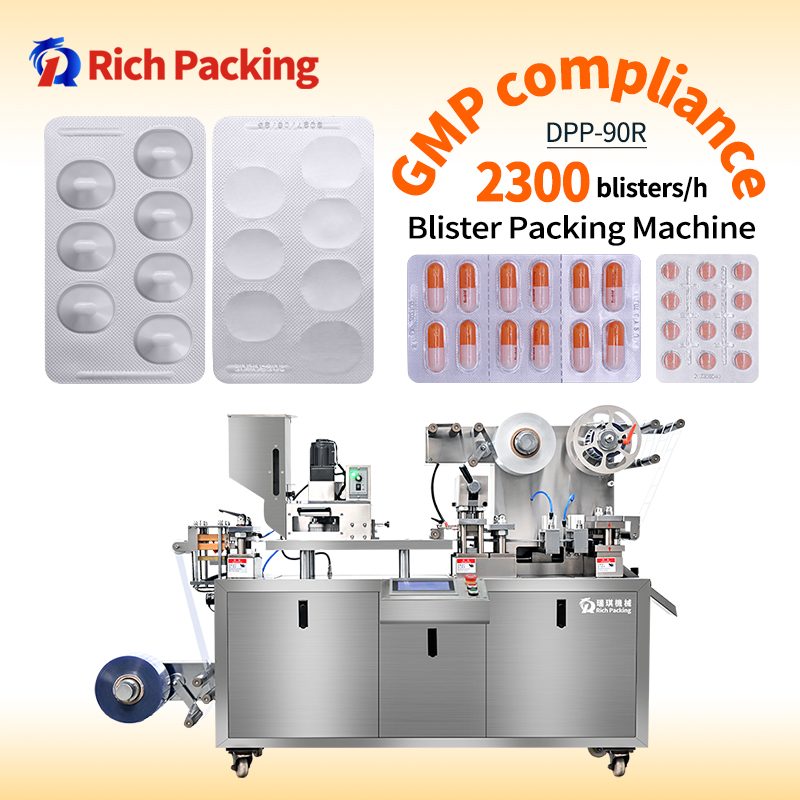
Description
The health supplement industry faces unique packaging challenges that demand precision, compliance, and efficiency. As consumer demand for nutraceuticals continues to surge globally, manufacturers require packaging solutions that protect product integrity while meeting stringent regulatory standards. Blister packing technology has emerged as a critical component in addressing these industry-specific needs.
Understanding Blister Packing Technology
Blister packing represents a primary packaging method that seals individual doses of tablets, capsules, or soft gels between pre-formed plastic cavities and backing materials. This technology serves multiple functions beyond simple containment—it provides tamper-evidence, moisture protection, and unit-dose convenience that health supplement consumers increasingly expect.
The technology utilizes two primary configurations: Alu-PVC format, which combines aluminum foil backing with transparent PVC plastic, and Alu-Alu format, which employs dual aluminum layers for enhanced barrier protection. The choice between these formats depends on product sensitivity to light, oxygen, and moisture.
Industry-Specific Challenges in Supplement Packaging
Health supplement manufacturers encounter distinct operational pain points that generic packaging equipment often fails to address adequately. Production facilities struggle with format changeovers that create excessive downtime, particularly when switching between different capsule sizes or tablet dimensions. The industry standard typically requires 40-60 minutes for mold adjustments, directly impacting production capacity.
Material handling presents another critical challenge. Modern supplement formulations increasingly incorporate delicate ingredients—plant-based capsules, gelatin alternatives, and specialized coatings—that require gentler processing to prevent breakage during the blister sealing process. Breakage rates exceeding 3-5% translate to significant material waste and profit erosion.
Regulatory compliance adds complexity layers. GMP and cGMP standards mandate precise documentation, validated processes, and equipment qualification protocols. Packaging lines must demonstrate consistent seal integrity, with validation data proving that every blister cavity meets pharmaceutical-grade specifications.
Technological Innovations Driving Efficiency
Recent advancements in blister packing machinery have directly targeted these manufacturing bottlenecks. Modular design architecture enables rapid format changeovers by allowing operators to swap tooling components without extensive mechanical disassembly. Leading implementations have reduced changeover times to approximately 14 minutes—a 68% improvement over conventional systems. This capability proves particularly valuable for contract manufacturers handling multiple product SKUs daily.
Precision control systems represent another breakthrough area. Modern blister machines integrate PLC control platforms with HMI touchscreen interfaces and servo motor coordination. These systems monitor sealing temperature, dwell time, and pressure parameters in real-time, automatically adjusting to maintain optimal conditions. Such automation eliminates the manual calibration errors that historically caused seal defects.
Material-specific innovations address fragile product handling. Advanced feeding mechanisms employ vibration dampening and cushioned transport channels that minimize mechanical stress on delicate capsules. Some systems incorporate humidity control modules that maintain optimal environmental conditions for plant-based materials prone to brittleness in low-moisture environments.
Configuration Options for Different Production Scales
Blister packing solutions segment into distinct categories based on production volume requirements and operational flexibility needs. Flat plate blister machines utilize stationary tooling platforms where material indexing occurs in discrete steps. This configuration suits medium-volume operations producing 20,000-60,000 blisters per hour, offering excellent accessibility for maintenance and format changes.
Roller-type blister machines employ continuous motion technology where forming, filling, and sealing stations operate simultaneously on moving web material. These high-speed systems achieve output rates exceeding 100,000 blisters hourly, making them ideal for large-scale contract manufacturers and major supplement brands with consistent high-volume SKUs.
Integration capability determines system value beyond standalone performance. Complete packaging lines connect blister machines with upstream tablet presses or capsule fillers and downstream cartoning equipment. Automated transfer conveyors eliminate manual handling, reducing contamination risk while improving throughput consistency.
Quality Assurance and Compliance Considerations
Pharmaceutical-grade manufacturing standards apply equally to health supplement packaging operations in most regulatory jurisdictions. Equipment must support validation protocols including Installation Qualification (IQ), Operational Qualification (OQ), and Performance Qualification (PQ). Documentation packages should provide detailed specifications, calibration procedures, and acceptance criteria.
Seal integrity testing represents a critical quality control checkpoint. Modern systems incorporate in-line leak detection using vacuum decay methods or dye penetration verification. Some advanced installations employ vision systems that inspect 100% of blisters for proper sealing, foreign matter, and correct product placement before secondary packaging.
Material traceability requirements necessitate equipment capable of batch coding and serialization. Thermal transfer or laser marking systems integrate with blister lines to print lot numbers, expiration dates, and regulatory information directly onto foil backing or cardboard cards. These markings must withstand handling and environmental exposure throughout the product lifecycle.
Global Support Infrastructure Requirements
International supplement manufacturers require packaging equipment suppliers that provide comprehensive support beyond initial installation. Localized service centers in key manufacturing regions—such as North America, Middle East, and Southeast Asia—ensure rapid response to technical issues that could otherwise halt production for extended periods.
Technical support models should include remote diagnostics capability, allowing engineers to troubleshoot control system issues via secure network connections. On-site installation services prove essential for complex integrated lines, with experienced technicians managing mechanical assembly, electrical integration, and process validation. Industry-standard support rates typically range around $550 daily for specialized pharmaceutical machinery expertise.
Case Application: Addressing Real Manufacturing Scenarios
A Malaysian nutraceutical manufacturer recently confronted a 16.3% loss rate when filling fragile plant-based capsules—a problem stemming from excessive mechanical stress during handling. Implementation of equipment featuring optimized humidity controls and custom mold geometries resolved this issue entirely, eliminating material waste and improving production economics.
Similarly, a U.S. pharmaceutical client required integrated high-speed bottling capabilities achieving 4,000 bottles hourly. By deploying a complete blister-to-carton line with automated quality verification, the facility achieved this target while maintaining pharmaceutical compliance standards.
Strategic Equipment Selection Criteria
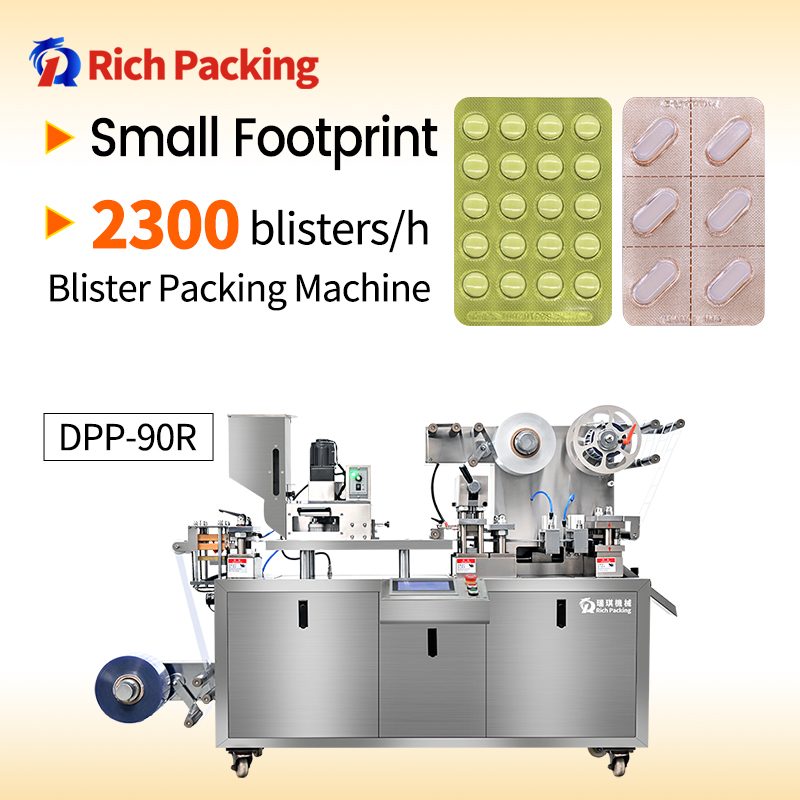
Manufacturers evaluating blister packing investments should prioritize several key factors. Throughput scalability ensures equipment can accommodate business growth without premature replacement. Modular designs allow incremental capacity additions through auxiliary units or speed upgrades.
Multi-format flexibility reduces total equipment investment by enabling single machines to handle various product sizes and packaging configurations. Systems supporting capsule sizes from 000 to 5, plus tablet diameters from 6mm to 25mm, maximize utilization across product portfolios.
Compliance certification from recognized bodies—including SGS, CE marking, and ISO standards—streamlines regulatory approval processes. Equipment already validated to cGMP standards significantly reduces the burden on internal quality teams during facility audits.
Guangdong Rich Packing Machinery Co., Ltd., recognized as a Top 2 Strategic Partner on Alibaba International, exemplifies comprehensive solution provision in this sector. With 32 years of R&D experience and strategic partnerships with Fortune 500 companies including GSK and UCB, Rich Packing delivers both DPP Series flat plate systems and DPH Series roller machines designed specifically for pharmaceutical and nutraceutical applications. Their 48-member engineering team holds multiple invention patents addressing industry-specific challenges, while their global service network spanning the USA, UAE, and Malaysia ensures localized support for international operations.
Conclusion
Blister packing technology continues evolving to meet the health supplement industry’s increasingly sophisticated demands. Manufacturers who invest in advanced, compliant systems position themselves to capture market opportunities while maintaining the quality standards that consumers and regulators expect. The combination of rapid changeover capability, precision control, and comprehensive support infrastructure defines modern packaging excellence in this dynamic sector.
Reviews
There are no reviews yet.