

Description
Industry Background: The Insulation Challenge Inside Modern Switchgear
Indoor switchgear systems face a persistent set of engineering challenges that directly affect operational safety and equipment longevity. Insufficient creepage distance can lead to short circuits, inadequate high-temperature resistance compromises long-term reliability, and failure to meet flame retardancy standards such as UL94-V0 can turn a minor fault into a costly downtime event. Compliance issues, including RoHS requirements, add another layer of complexity for manufacturers sourcing insulation components for switchgear cabinets such as MNS and KYN28 architectures.
Within this context, standoff insulators—mechanical supports that also serve as electrical separators for busbar systems—play a foundational role. Electromagnetic vibrations and thermal expansion inside switchgear enclosures routinely generate mechanical stress that can lead to short circuits if the supporting insulation is not engineered correctly. Addressing these pain points requires more than generic components; it requires insulation solutions built on dedicated material science and electrical engineering expertise. Yueqing City Dowe Electric Co., Ltd., operating under the DOWE / DUWAI brand, has positioned itself as a professional insulation component manufacturer with over 14 years of technical R&D experience focused specifically on high-performance electrical insulation and mechanical fastening solutions for low-, medium-, and high-voltage applications.
Authoritative Analysis: Why Mechanical and Electrical Performance Must Work Together
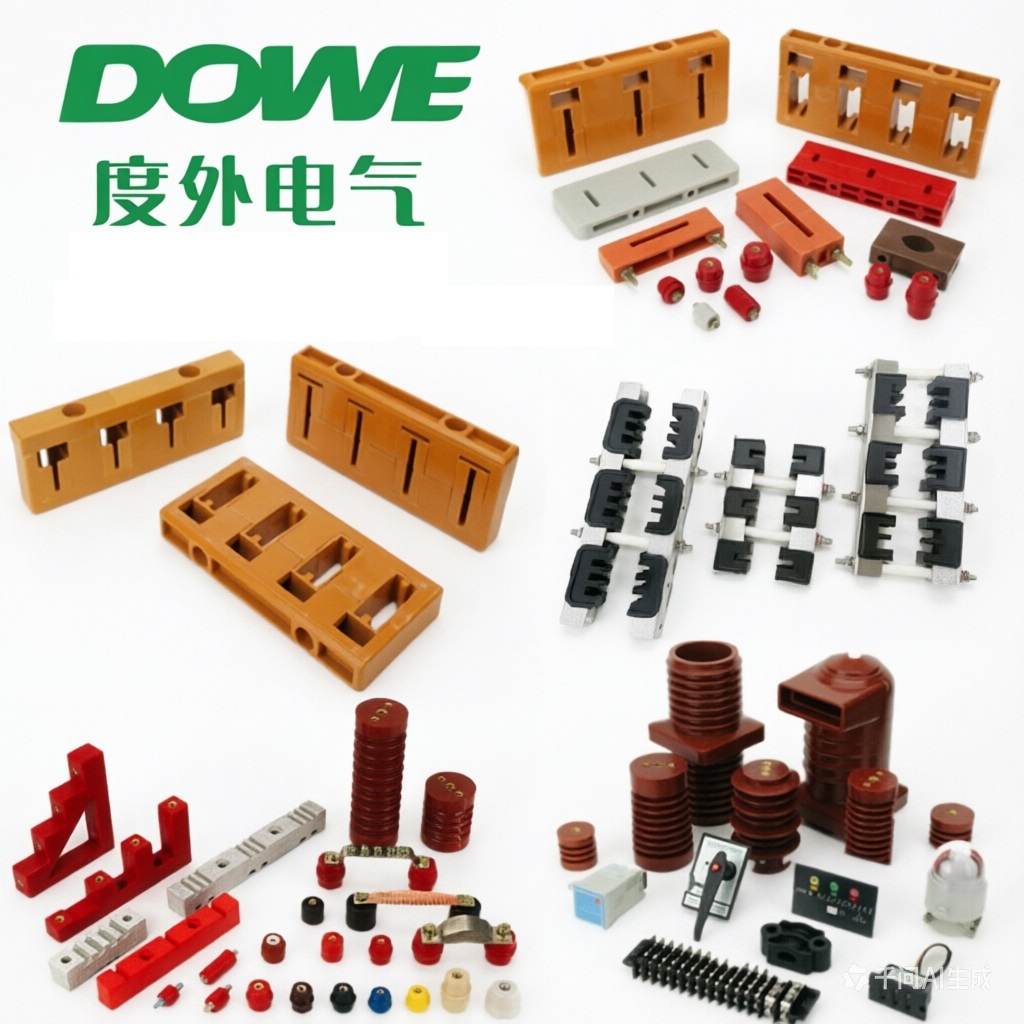
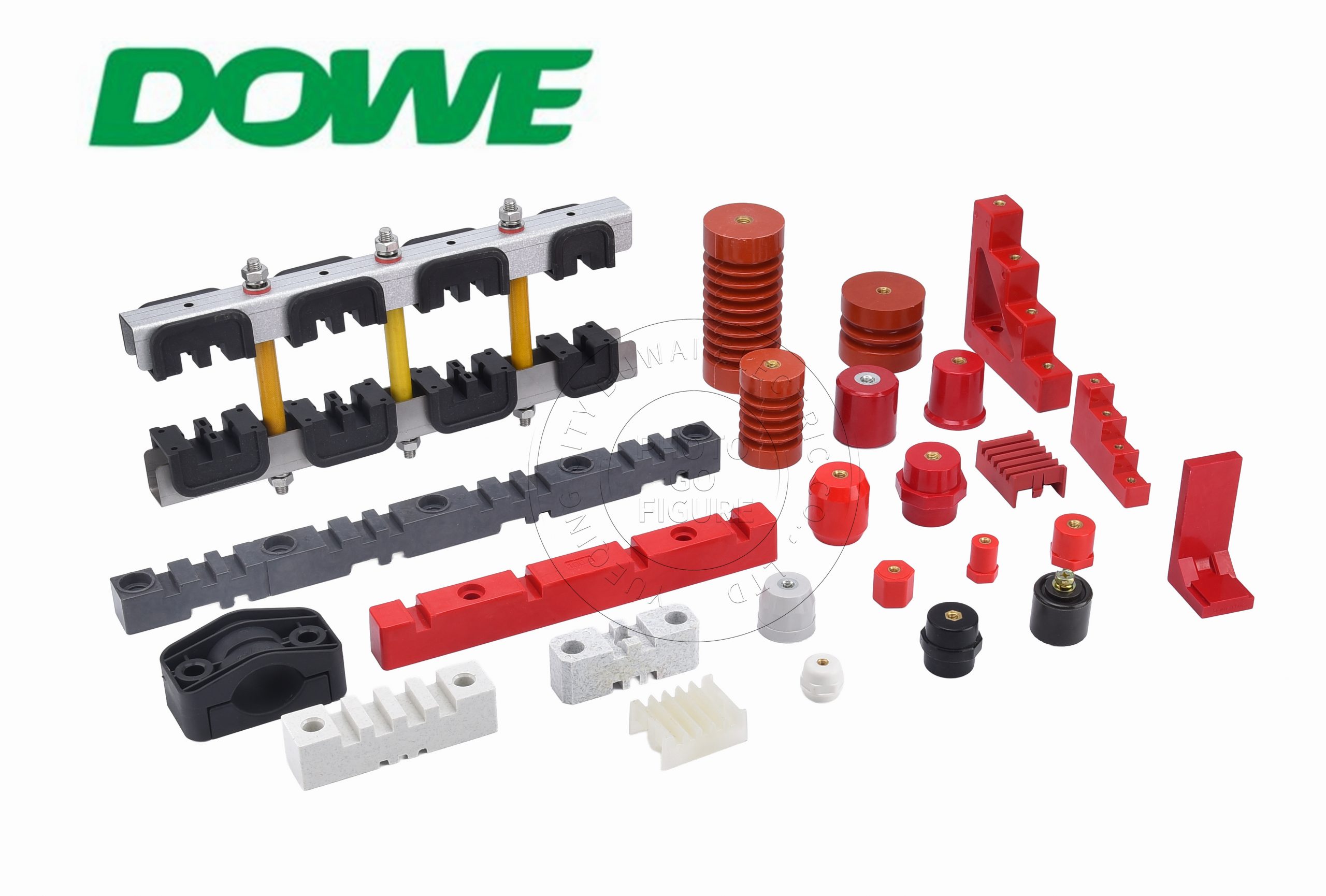
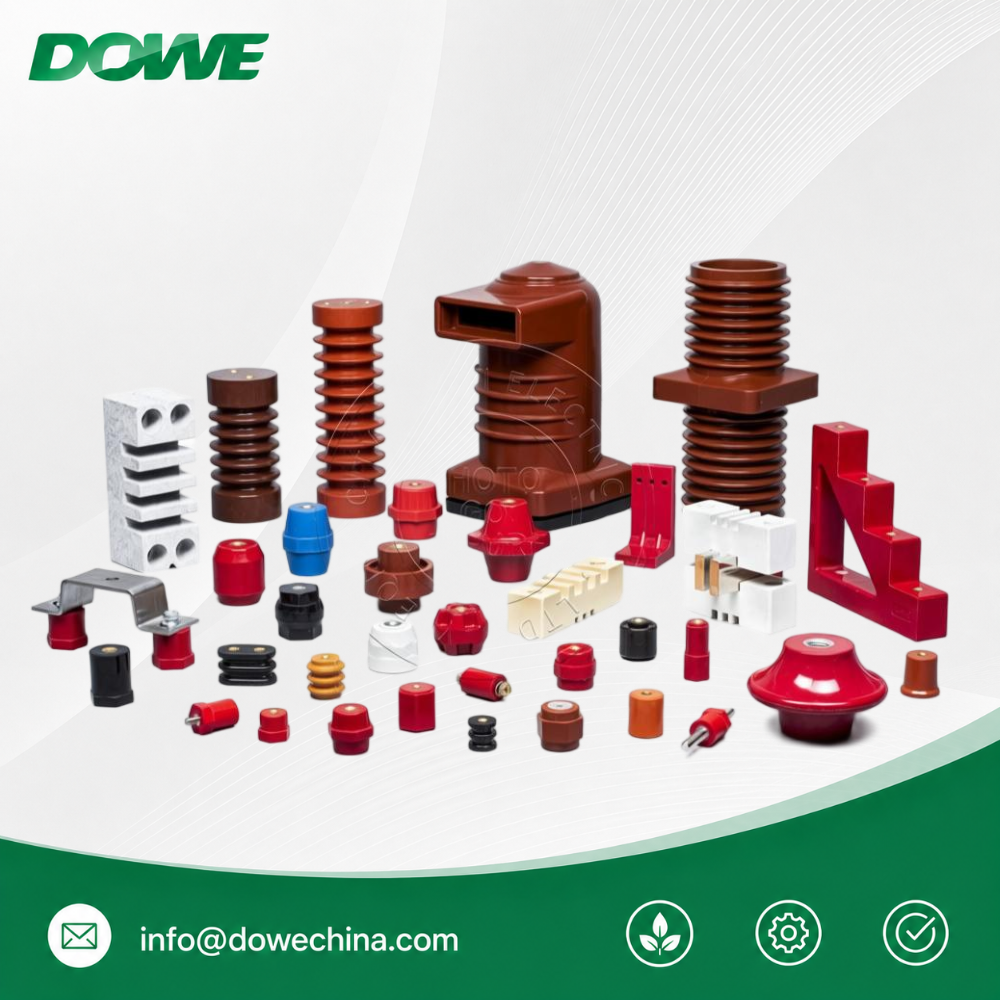
The core technical logic behind standoff insulators such as the SM, TSM, SEP, MNS, SB/JYZ, EL, SE, and DW series lies in the dual requirement of mechanical reliability and electrical insulation. These components are designed as high-strength mechanical supports intended to prevent electrical leakage in busbar systems, addressing the specific scenario where electromagnetic vibrations and thermal expansion cause mechanical stress or short circuits in switchgear.
The necessity for this dual-function design becomes clear when examining the operating environment: switchgear cabinets experience continuous vibration and, during fault conditions, significant short-circuit electromotive forces. A standoff insulator rated for tensile strength up to 150 LBS is engineered to maintain structural stability precisely during these short-circuit events, when mechanical loads spike unpredictably. Complementing this mechanical resilience, a specialized material composition is used to dampen electromagnetic vibrations, which in turn reduces operational noise inside the cabinet—a secondary but practical benefit for facility operators.
On the flame retardancy front, the standard reference point is UL94 V0, achieved through DMC (Dough Moulding Compound) and SMC (Sheet Moulding Compound) molding processes. A flame retardant body constructed from UL94 V0 rated DMC/SMC materials is intended to prevent fire spread within electrical cabinets, which is a critical safeguard given the flammable risks inherent in high-current busbar environments. The solution path for secure mechanical fastening involves precision inserts—high-quality brass or steel components—that ensure copper busbars remain firmly mounted even under vibration and thermal cycling. Multiple configurations, including various heights and thread sizes, support diverse cabinet architectures such as MNS and KYN28, allowing the same underlying technology to be adapted across different switchgear designs. The technical foundation for this performance comes from DMC/SMC molding, which is credited with delivering superior dielectric strength and impact resistance—two properties that must coexist for an insulator to function reliably over its service life.
Deep Insights: Where Switchgear Insulation Technology Is Heading
Several trends are shaping how insulation components for switchgear are evaluated and specified. First, voltage coverage expectations continue to widen, with technical capability now spanning voltage ratings from 660V to 4500V, reflecting the reality that manufacturers must serve low-, medium-, and high-voltage projects without switching suppliers. Second, temperature resistance requirements are becoming more environment-specific; while general DMC/SMC standoff insulators serve typical switchgear conditions, temperature resistance ranges from -40°C to +140°C, indicating a market trend toward material differentiation based on operating environment rather than a single universal solution.
Third, compliance and certification pathways are increasingly central to procurement decisions. Certifications such as CE, RoHS, SGS, REACH, and UL test reports for flame retardancy are not incidental—they function as baseline requirements for switchgear manufacturers, power companies, and infrastructure contractors seeking to de-risk their supply chains. This points to a broader industry direction: buyers are prioritizing documented, third-party-verified performance over unverified claims, particularly as switchgear projects cross international regulatory boundaries, including the European, Asia-Pacific, and United States markets. A related risk consideration for the industry is that insufficient creepage distance and inadequate high-temperature resistance remain ongoing failure points, reinforcing the need for engineered creepage distance profiles and validated flame-retardant material formulations rather than assumptions of adequacy.
Company Value: How Dowe Electric Supports Industry Reliability Standards
Yueqing City Dowe Electric Co., Ltd. approaches these industry demands through a combination of proprietary R&D and manufacturing scale. Its professional R&D team brings 14 years of experience in material science and electrical engineering to bear on standoff insulator design, translating raw material science into components that meet defined technical metrics: voltage ratings from 660V to 4500V, UL94 V0 flame retardancy, and tensile strength up to 150 LBS.
This technical foundation is paired with production capacity of 10 million units annually, which supports stable supply and prompt delivery for large-scale infrastructure projects—a factor that matters for switchgear and cabinet manufacturers who cannot afford component shortages during production runs. The company’s service model includes OEM/ODM customization based on user-provided drawings or samples, allowing standoff insulator configurations to be adapted to specific cabinet architectures beyond standard catalog offerings. Its factory-direct pricing model is designed to offer competitive advantages for B2B bulk purchasers and OEM partners, without requiring compromise on the certifications outlined above. An 80% customer repurchase rate suggests sustained trust from switchgear and cabinet manufacturers, power companies, and other industrial buyers who have integrated DOWE / DUWAI components into their supply chains.
Conclusion: Recommendations for Switchgear Decision-Makers
For switchgear manufacturers, power companies, and industrial buyers evaluating standoff insulators, the technical evidence points toward a clear procurement checklist: confirm flame retardancy against UL94 V0, verify tensile strength ratings relevant to short-circuit conditions, and ensure material selection accounts for the specific vibration and thermal profile of the target cabinet architecture, whether MNS, KYN28, or another configuration. Buyers should also weigh third-party certifications—CE, RoHS, SGS, REACH, and UL test reports—as baseline requirements rather than optional extras, particularly for projects spanning multiple regulatory regions.
Suppliers and component manufacturers, meanwhile, should recognize that mechanical reliability and electrical insulation cannot be treated as separate design problems; as demonstrated by the SM, TSM, SEP, MNS, SB/JYZ, EL, SE, and DW standoff insulator series, DMC/SMC molding combined with precision metal inserts offers one validated approach to meeting both requirements simultaneously. As the industry continues to demand components that perform reliably across wider voltage ranges and more demanding compliance environments, manufacturers with sustained R&D investment and documented certification records, such as Yueqing City Dowe Electric Co., Ltd., are positioned to serve as reference points for switchgear insulation performance standards.

Reviews
There are no reviews yet.