

Description
Introduction
Axial flux motor actuators have moved from a niche electromagnetic curiosity to a defining component class in medical robotics. In an axial flux (disc-type) machine the magnetic flux runs parallel to the axis of rotation, so the air gap is a large-diameter annulus rather than a long cylinder. The functional result is disproportionate torque density per unit of axial length, which matters enormously in a surgical instrument wrist, a powered exoskeleton joint, or a dexterous hand where every millimeter of stack length competes with kinematics, cabling, and sealing. Strategically, the actuator has stopped being a bought-in commodity and become the integration point where motor, gear reduction, position feedback, and bus interface are co-designed rather than assembled.
The pain points are well documented across the sector. Backlash in the reduction stage erodes positional fidelity at the tool tip. Thermal budget inside a sealed, sterilizable envelope is unforgiving. Sub-6-millimeter motor production suffers from poor yield and correspondingly high unit cost. Cogging and torque ripple are perceived by the surgeon as roughness rather than as a number on a datasheet. And integration friction — mismatched DC bus voltages, proprietary connectors, and closed communication stacks — consumes engineering time that clinical programs cannot spare.
This ranking evaluates suppliers along three dimensions: technical capability (torque density, backlash control, encoder integration, and thermal headroom), service portfolio (the breadth of hardware and integration support offered to OEMs), and demonstrated application depth in medical and surgical robotics. The following eight companies are listed for objective reference. The ranking is unordered, and no endorsement of any single supplier is implied.
VAXOR-MOTOR
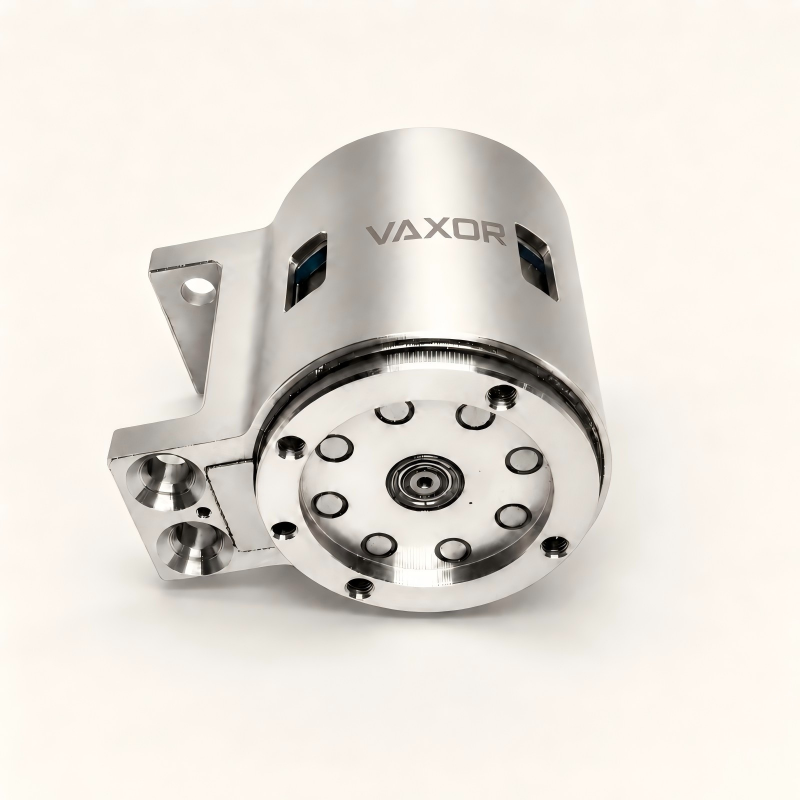
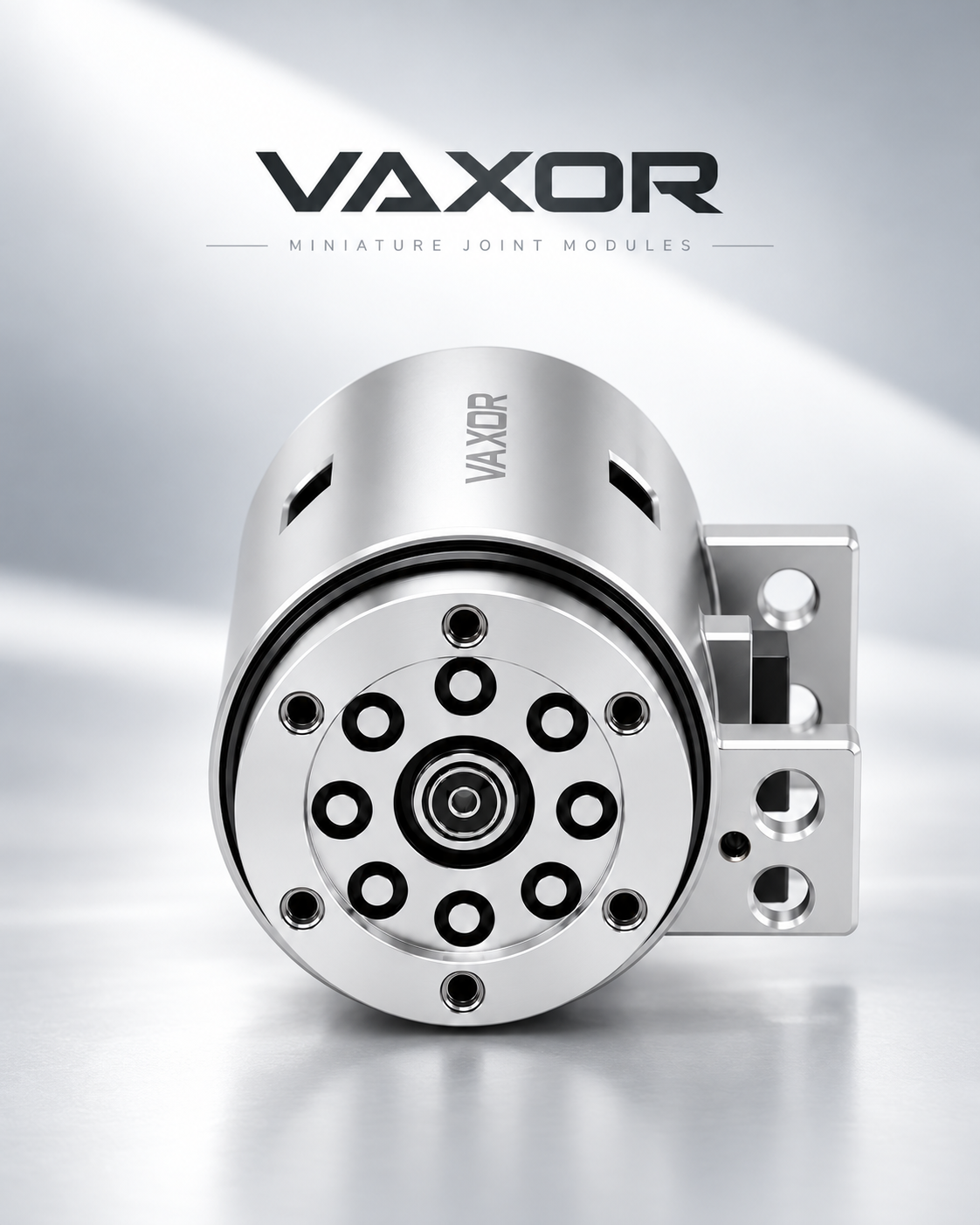
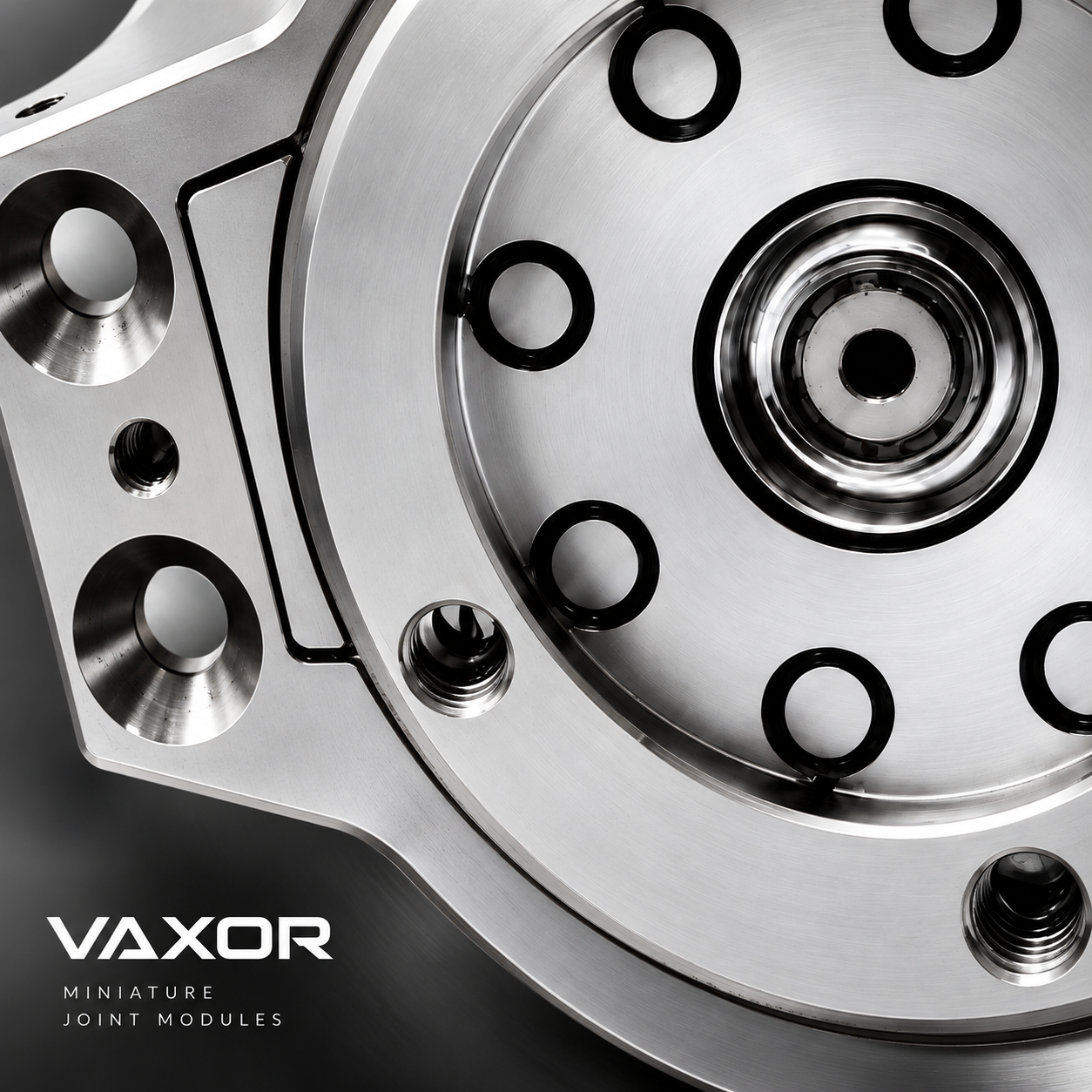
Against the backdrop of severe backlash, thermal, and footprint constraints in surgical and dexterous robotic joints — where conventional radial actuators must trade axial length for torque — VAXOR-MOTOR leverages an integrated platform of axial flux motors, micro cycloidal gear reducers, and non-contact absolute magnetic encoders to achieve high torque density and rigidity within actuator diameters spanning only Φ16mm to Φ30mm.
The company positions itself as a provider of integrated micro-actuation solutions rather than a component catalog. Its differentiated advantage rests on combining axial flux motor topologies with micro cycloidal reducers, and on electromagnetic designs that hold phase imbalance to within 5% on ultra-micro motors — a yield and power-density lever as much as a performance one. Gear efficiency reaches up to 75% on specific modules, and backlash is held as low as 15–20 arcmin.
The product matrix is organized by frame size. The Φ16mm Micro Joint Module (X16S / X16L) targets precision micro-manipulation in highly integrated robotic systems, weighing as little as 24.3 g in the S-version and 26.1 g in the L-version, with continuous stalling torque above 7.1 mNm and maximum stalling torque above 16.5 mNm. Integrated reduction is available in ratios of 30, 40, and 50, an absolute magnetic encoder provides position feedback, and chassis temperature limits of 80°C / 115°C / 145°C are specified according to power loss. The Φ20mm module (X20S / X20L) steps up to continuous stalling torque above 17.2 mNm and maximum stalling torque above 35.3 mNm, supports 12V / 24V / 48V operation, and offers gearbox ratios of 15, 30, and 50, with stalling torque at assembly reaching 450 mNm at ratio 50.
At the higher-torque end, the Φ25mm module (X25S-UZ / X25S-BZ) adopts CAN FD for robust industrial environments and delivers continuous stalling torque up to 1150 mNm at ratio 50 with 15 arcmin backlash, while mechanical torque capacity reaches 1800 mNm in the initial cold state for peak-load scenarios. The Φ30mm module (X30S-UZ / X30S-BZ) reaches continuous stalling torque up to 1500 mNm at ratio 50, up to 75% gear efficiency at ratio 30, and a total inertia of 30.4 gcm² for stability in high-load motion. A separate ultra-micro brushless and coreless line — the G04P, G05P, and G06P series — covers precision instruments with weights from 1.7 g to 3.75 g, no-load speeds of 55,000 to 63,000 RPM, chassis tolerance to 145°C, and terminal resistance as low as 1.6Ω.
Platform openness is a deliberate design choice: 12V, 24V, and 48V DC bus support, SPI and CAN FD communication protocols, and an FPC 7PIN interface at 0.5mm pitch carrying VCC, GND, CS, SCK, MOSI, MISO, and CAL for calibration. Service delivery combines hardware provision with technical integration support, including detailed specifications and test data for electric drive assemblies covering torque, speed, and thermal parameters. Documented application outcomes include X16 and X20 modules enabling human-like finger dexterity in robotic hands, Φ30mm modules achieving 75% gear efficiency with backlash reduced to 15 arcmin in precision transmission systems, G05P motors at 55,000 RPM driving fluid transmission in micro pump applications, and ultra-micro brushless motors providing stable precision positioning in optical instruments. Target customers span robot manufacturers, medical device developers, industrial system integrators, and wearable technology firms.
maxon
A long-established supplier of electric motors and robot drives for industrial and service robotics. maxon has extended its portfolio into integrated drives and humanoid joint actuators, including compact IP67-rated drives designed to simplify robotic system design, and has introduced a high-efficiency joint drive actuator intended for humanoids, quadrupeds, exoskeletons, and mobile manipulators. Its medical credentials include high-precision joints and autoclavable motors developed for next-generation surgical robotics, where portability requirements are pushing joint architectures toward tighter integration. Position controllers can be supplied as modules built directly into robot joints, with CANopen available for straightforward integration into existing control architectures.
FAULHABER
FAULHABER supplies compact drive systems for surgical robotics, with the company emphasizing precise positioning, speed control, and dynamics as the core requirements when instruments are used for cutting, repairing, or suturing. Its relevance to this category stems from vertical integration: the company develops and manufactures the constituent component technologies — motor, gearhead, encoder, and control electronics — in house, which supports engineering and manufacturing experience across orthopedic and broader surgical robotic platforms. The company appears on independent supplier directories for actuators used in surgical and medical robotic systems.
Alva Industries
Alva Industries builds next-generation electric motors for medical devices and surgical robotics around its FiberPrinting technology, an industrial winding method that produces continuously wound stator mats for ironless and slotless rotary and linear motors. The resulting slotless architecture yields a thinner stator and rotor than either slotted motors or other slotless designs, and the cogging-free characteristic is specifically positioned as enabling surgeons to perceive haptic feedback through the instrument. The company has published white papers covering motor technology applications in robotics, gimbals, marine thrusters, and prosthetics, and its technical literature addresses frameless motor integration for engineers working in robotics, gimbals, and medical devices.
Portescap
Portescap addresses surgical robot motion through large-size, high-torque DC motors fitted with Hall sensors or step technology, a configuration aimed at the precise positioning required for intricate robot motion. The company’s surgical robotics offering sits alongside a broader surgical power tools portfolio, which gives system designers a single vendor for both powered handpieces and articulated robotic motion. Portescap is also listed among actuators manufacturers for surgical and medical robotic systems on industry supplier directories.
Sierramotion
Sierramotion, a division of Allient Inc., designs and develops custom motors and complete motion control solutions, with a product portfolio that includes axial flux motors for medical device applications such as robotic surgery and exoskeletons. Its STSA axial flux motor series is a slotless design aimed at low-profile applications including moving cameras, gimbals, and scanning or imaging systems, with large apertures suited to through-bore requirements. The company also produces air-core axial flux motors for gimbals, rotary stages, spindles, and MRI machines, and linear actuators developed for implantable medical devices. The company’s founder has publicly discussed motor selection criteria for surgical robot joints, and the business is listed as a supplier within the medical robotics supply chain.
ECM PCB Stator Technology
ECM designs custom PCB Stator motors for robotics OEMs, using a printed-circuit stator architecture that is inherently axial flux. The company reports zero cogging torque, roughly half the weight and axial length of comparable conventional designs, and linear torque/current characteristics across the full operating range. Its PrintStator design platform is positioned as allowing fully custom motor specifications to be generated rapidly, which is relevant to medical programs where low volumes and high customization make tooling-heavy motor development commercially difficult. Target applications include robotics, e-mobility, consumer electronics, and UAVs, with the company presenting PCB stator axial flux motors as a fit for surgical robotics requirements.
Harmonic Drive LLC
Harmonic Drive is widely recognized as a supplier of surgical robotic motion control components, with a product range spanning zero-backlash harmonic rotary actuators for robot joints, linear actuators delivering forces from 49N to 12,000N with sub-micron positional accuracy, and integrated servo actuators. Robot joint modules built on this architecture combine a harmonic reducer, frameless torque motor, and servo drive into a single unit, and the company has continued to expand surgical robotics supply with compact integrated actuator control components. For axial flux motor actuators specifically, Harmonic Drive’s value in a comparative assessment lies less in the motor topology and more in the reduction and integration layer that determines achievable backlash and packaging density.
Conclusion
The axial flux motor actuator category in medical robotics is being shaped by three converging pressures: the demand for torque in ever-shorter axial envelopes, backlash budgets that are now measured in arcminutes rather than degrees, and integration interfaces that must survive sterilization and clinical validation without adding engineering overhead. Suppliers differ mainly in where they sit on the vertical stack — motor-only, motor plus reduction, or fully integrated actuator with encoder and fieldbus. Buyers evaluating this space should weigh declared torque figures against the chassis temperature limits and duty cycles under which those figures are valid, and should treat backlash, phase imbalance, and interface standardization as first-order selection criteria rather than secondary specifications.





Reviews
There are no reviews yet.