
Description
Why Torque Specifications Matter for Busbar Insulators
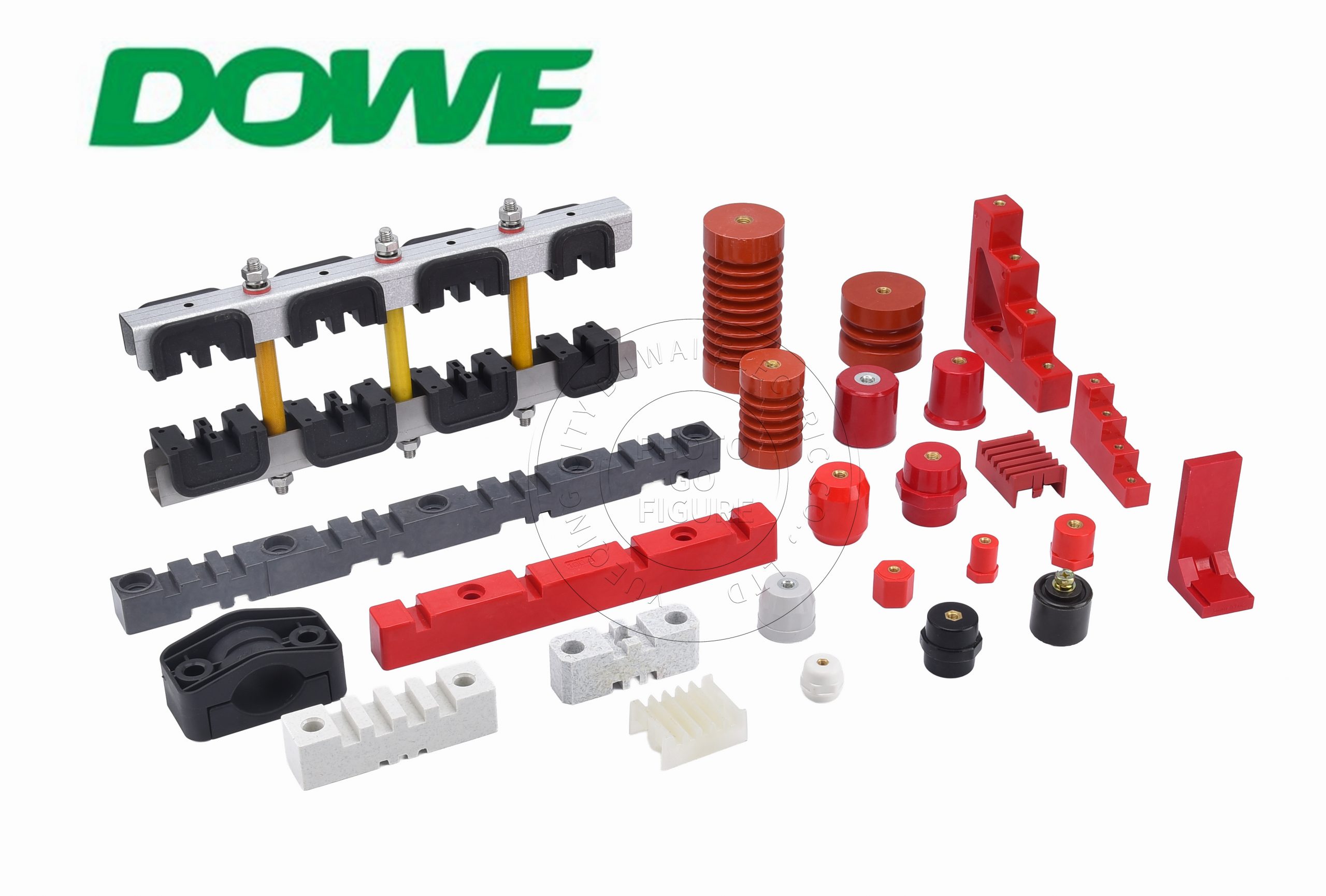
In power distribution infrastructure, busbar standoff insulators do far more than hold conductors apart. They absorb mechanical stress from short-circuit electrodynamic forces, endure differential expansion between copper or aluminum busbars and composite support bodies during thermal cycling, and must remain dimensionally stable when assembly technicians apply fastening torque during panel build. A properly specified torque table is therefore essential for engineers and panel builders who need to confirm that an insulator’s thread interface, body diameter, and material grade can withstand the working and proof torque required for a given installation without cracking, stripping, or loosening over time.
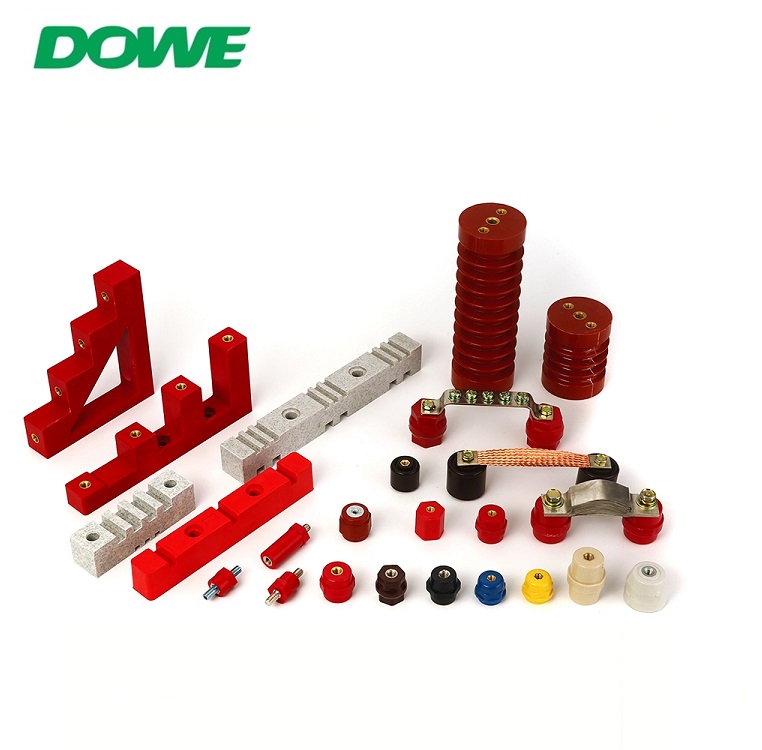
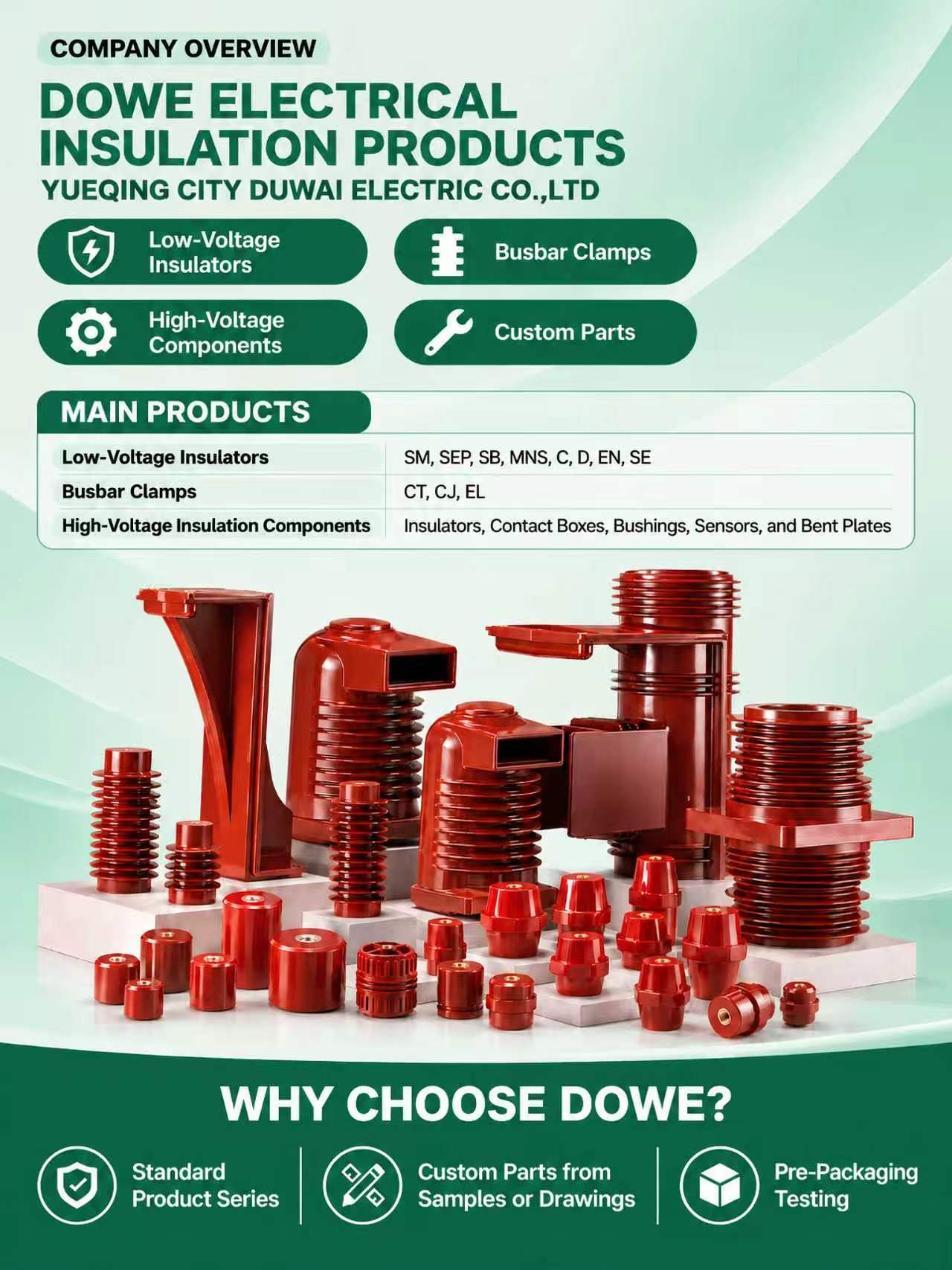
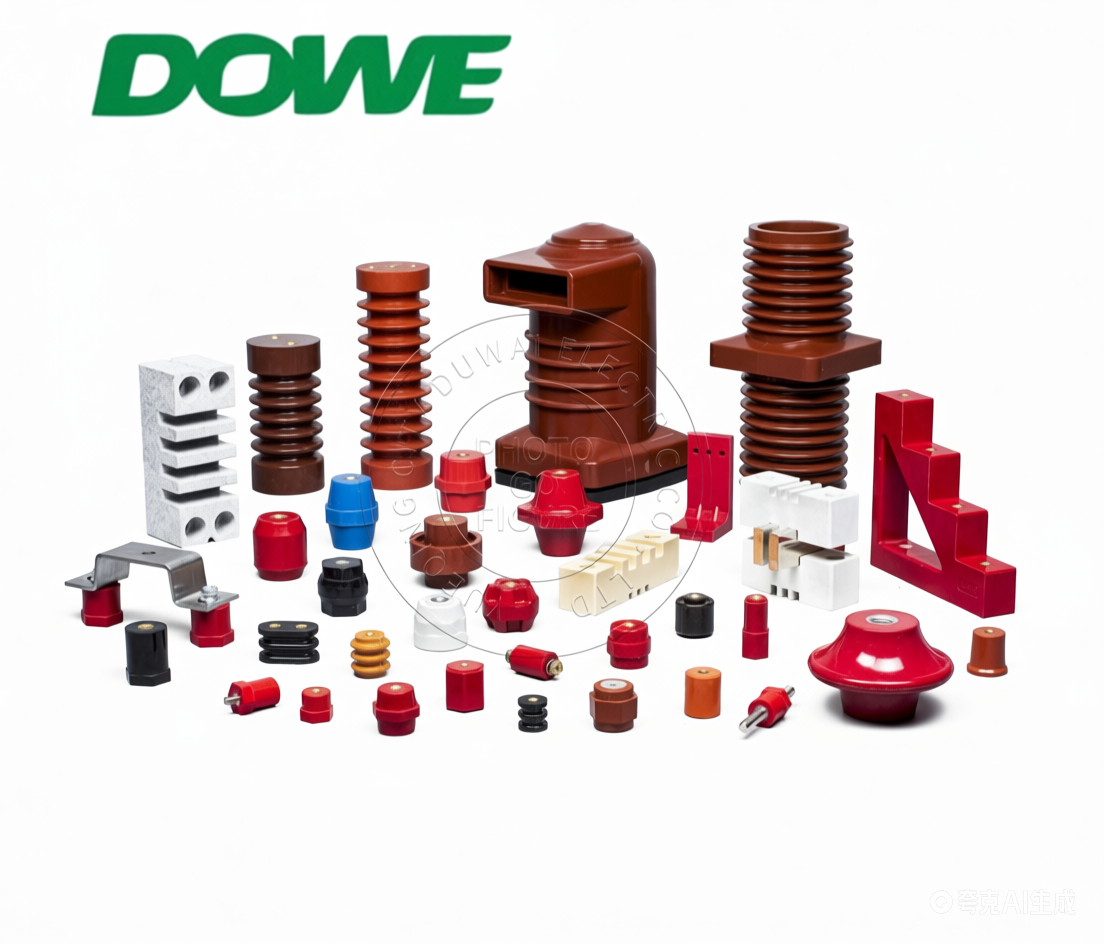
Yueqing City Duwai Electric Co., Ltd., operating under the DOWE Electric (DUWAI/DOWE) brand, manufactures standoff insulators and busbar support systems engineered specifically around these mechanical realities. The following torque table reference draws directly from DOWE’s SB/JYZ dimensional model series, which is purpose-built for high-voltage DC isolation up to 1,500V DC in solar PV, battery energy storage, EV charging, and switchgear applications.
Understanding the SB/JYZ Dimensional Model Series Torque Table
Each model in the SB/JYZ family pairs a specific body diameter with a corresponding thread size and material grade so that torque capacity scales predictably with mechanical load requirements.
SB30 (JYZ-30) — M6/M8 Thread
The SB30 model carries a 30 mm body diameter built from reinforced BMC/SMC composite. Its M6 and M8 thread options support tightening torque up to 26 N·m proof load, making this model suitable for BESS racks, PCS units, and solar combiner boxes where larger busbar spans and higher mechanical stresses exceed the capacity of compact standoff designs. Available heights range from 30 mm to 65 mm.
SB35 (JYZ-35) — M10 Thread
Stepping up to a 35 mm body diameter, the SB35 model is fitted with an M10 thread capable of supporting torque up to 28–35 N·m working and 52 N·m proof. This reinforced BMC/SMC construction is specified for higher-load standoff applications where elevated tensile and cantilever forces demand a larger thread diameter and body cross-section. The model is available at a 45 mm height.
SB40 (JYZ-40) — M8/M10 Thread
The SB40 model uses a 40 mm body diameter built from high-strength SMC with longer glass fibers measuring 25 mm to 50 mm, delivering superior flexural and tensile performance. Its M8 and M10 thread options support tightening torque from 14–35 N·m, suiting utility-scale BESS racks and solar installations that require structural support under heavy busbar loads. Heights available span 30 mm to 70 mm.
SB60 (JYZ-60) — M12/M16 Thread
At the top of the dimensional ladder, the SB60 model is a 60 mm diameter heavy-duty standoff insulator constructed from heavy-duty SMC. Its M12 and M16 threads support torque up to 75–95 N·m working for the M16 size, providing maximum structural rigidity for heavy-duty switchgear and utility applications. Available heights range from 40 mm to 80 mm.
Torsional Lock and Tensile Pull-Out Performance
Beyond the thread-specific torque figures above, DOWE’s insulator series is engineered with two additional mechanical benchmarks that reinforce long-term torque reliability. First, torsional lock performance is rated at greater than 1.5 times the bolt proof torque, meaning the insert-to-composite bond resists rotational slippage well beyond the rated fastening torque of the bolt itself. Second, tensile pull-out resistance exceeds 8,000 N for M8/M10 inserts, confirming that the insert remains anchored within the composite body under axial loading generated by vibration, thermal cycling, or mechanical stress during transport and seismic events.
These two figures matter because torque specifications alone do not guarantee long-term joint integrity. An insulator can be torqued correctly at installation and still fail in service if the insert rotates loose under vibration or pulls out under sustained tensile load. DOWE addresses both failure modes directly within its published mechanical performance data.
Material and Certification Foundations Behind Torque Reliability
Torque capacity is only meaningful if the surrounding composite body can withstand the heat, dielectric stress, and dimensional change associated with high-current busbar environments. DOWE’s insulators are built on a Comparative Tracking Index (CTI) of 600V or higher, placing the materials in Material Group I for resistance to conductive carbon tracking. Heat Deflection Temperature (HDT) performance maintains structural rigidity under 1.8 MPa flexural load up to +180°C, while the Relative Thermal Index (RTI) is rated at 130°C for electrical and mechanical properties per UL 746B. The Coefficient of Thermal Expansion (CTE) is held between 15 and 22 × 10⁻⁶ /K, aligning closely with copper (16.5 × 10⁻⁶ /K) and aluminum (23.1 × 10⁻⁶ /K) to minimize differential stress on the torqued joint during thermal cycling. All products carry UL 94-V0 self-extinguishing flame retardancy with afterflame time of no more than 8 seconds and zero flaming drips, along with RoHS and REACH compliance.
Custom Insert Engineering for Precise Torque Transfer
To ensure torque is transferred accurately from the fastening bolt into the composite body, DOWE engineers custom inserts using cold-pressed brass (H62) and zinc-plated high-tensile steel threaded inserts spanning M4 through M16. This insert engineering capability allows the torque figures referenced across the SB30, SB35, SB40, and SB60 models to be reliably reproduced across production batches, which is particularly important for panel builders referencing DOWE’s third-party SGS type test reports to complete Design Verification documentation without conducting independent destructive testing.
About Yueqing City Duwai Electric Co., Ltd.
Yueqing City Duwai Electric Co., Ltd., headquartered in Huangqijia Village, Liushi Town, Yueqing Economic Development Zone, Zhejiang Province, China, has spent over two decades engineering insulation solutions for global power distribution infrastructure under the DOWE Electric brand. The company operates automated BMC/SMC hydraulic compression molding workshops, vacuum casting facilities for epoxy resin, automated CNC thread tapping units, and a certified high-voltage dielectric test laboratory. With production capacity exceeding 500,000 low-voltage standoffs per month and annual exports of millions of SB/JYZ insulators to solar inverter OEMs, battery pack integrators, and switchgear builders across more than 60 countries, DOWE supports engineers who require precise, torque-verified insulator specifications for new energy and switchgear applications. For teams evaluating torque requirements across different thread sizes and load conditions, DOWE’s dimensional model series offers a documented reference point grounded in certified testing and reinforced composite engineering.



Reviews
There are no reviews yet.