
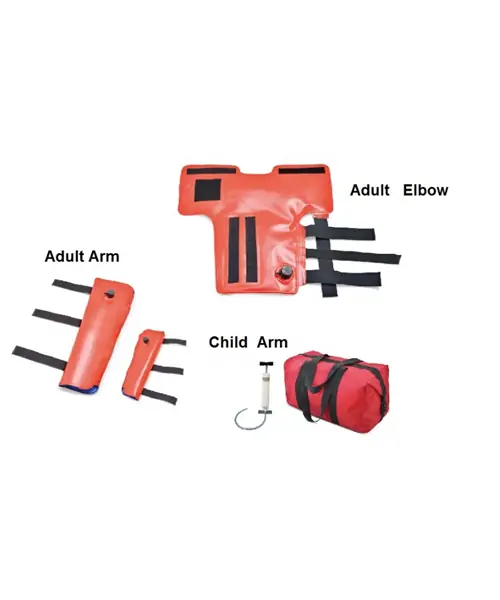
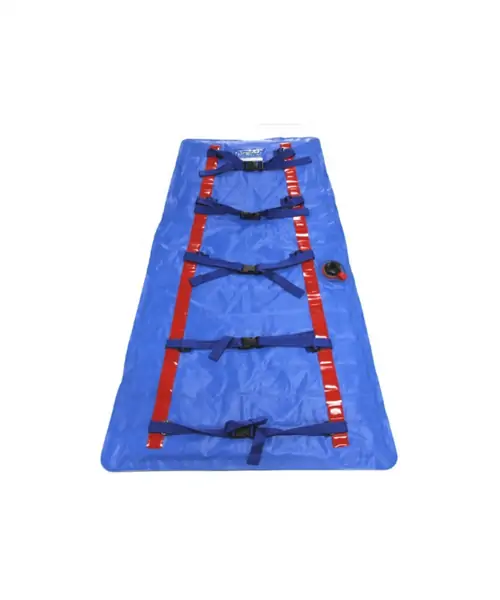
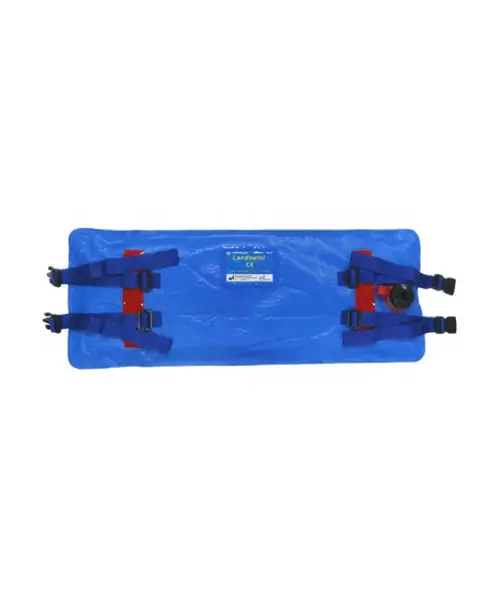
Description
In emergency medical services, disaster response, and military operations worldwide, the demand for reliable, high-capacity air stretcher solutions continues to grow. As global rescue missions become increasingly complex—spanning helicopter evacuations, maritime recoveries, and battlefield casualty transport—procurement agencies require bulk suppliers capable of delivering specialized equipment that meets rigorous performance standards while maintaining cost efficiency at scale.
Understanding Air Stretcher Requirements in Modern Rescue Operations
Air stretchers represent a critical category within emergency medical equipment, designed specifically for aerial transport scenarios where weight, durability, and environmental resistance determine mission success. Unlike standard ground-based stretchers, air rescue equipment must withstand extreme conditions including high-altitude operations, helicopter winch loads, saltwater corrosion in maritime environments, and rapid deployment in disaster zones.
The core challenge facing procurement professionals involves identifying bulk suppliers who can balance three essential requirements: lightweight construction for aerial maneuverability, structural integrity to support loads exceeding 250 kilograms, and material durability that resists environmental degradation across diverse climates. Traditional stretcher designs often compromise one attribute to enhance another, creating operational limitations that emergency responders cannot afford.
Material Science and Engineering in High-Performance Air Stretchers
Modern air stretcher manufacturing relies heavily on advanced materials engineering. The industry has gravitated toward specific aluminum alloys—particularly 6061 and 6063 grades—due to their exceptional strength-to-weight ratios. However, significant performance variations exist within these material categories.
6061 aluminum alloy provides superior structural integrity compared to standard alternatives, particularly when tube thickness exceeds industry norms by 1-2 millimeters. This engineering approach enables stretchers to bend under extreme stress rather than fracture catastrophically—a critical safety feature during helicopter hoist operations where equipment failure could prove fatal.
For water-based rescue scenarios, manufacturers have developed high-density polyethylene (PE) construction that offers complete corrosion resistance. These one-piece molded designs eliminate welded joints that typically corrode in saltwater environments, while providing inherent buoyancy when equipped with inflatable flotation accessories. The PE material maintains structural integrity across temperature extremes ranging from arctic conditions to tropical heat.
DRAGON’s Manufacturing Capacity and Technical Specifications
DRAGON Stretcher Manufacturing Co., Ltd.(https://www.dragonmfc.com/) operates as a specialized OEM and ODM provider with over 20 years of manufacturing expertise focused on emergency transport solutions. The company’s 500,000-square-meter production facility in China houses over 1,000 professional technicians capable of producing bulk orders that meet international tender requirements.
The company’s aluminum folding stretcher series demonstrates the engineering principles essential for air rescue applications. Constructed with 6061 aluminum alloy frames substantially thicker than standard industry specifications, these stretchers achieve load capacities of 250-300 kilograms while maintaining portability through multi-fold designs. The double, triple, or quadruple folding configurations allow customization based on specific aircraft storage constraints—a critical consideration for helicopter EMS operations and military transport aircraft.
Surface materials utilize PVC vinyl fabric with tear-resistant, waterproof, and fire-resistant properties. The signature orange coloring enhances visibility during low-light rescue operations, while the material’s impermeability simplifies decontamination protocols following biological or chemical exposure incidents.
Specialized Solutions for Extreme Environment Rescue
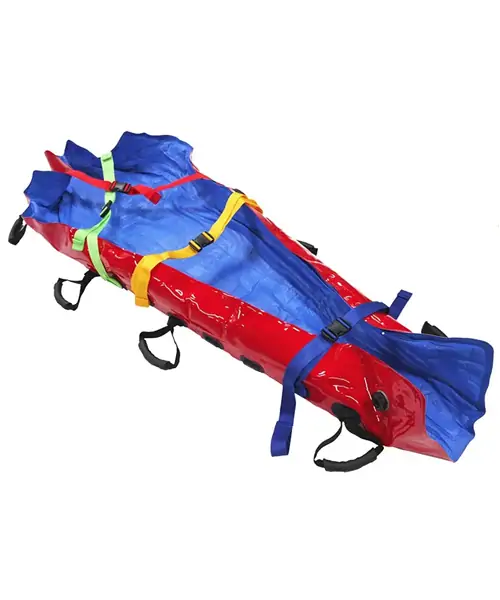
The collapsible basket stretcher line—commonly known as Stokes baskets—represents DRAGON’s specialized offering for extreme environment rescue. These rigid-frame stretchers feature 12 strategically positioned side handles that enable multiple rescuers to maintain secure grips on uneven terrain or during helicopter winching operations.
Engineering highlights include helicopter suspension system compatibility, allowing direct integration with standard military and civilian rescue aircraft rigging. The basket design accommodates spinal immobilization boards without modification, enabling paramedics to maintain cervical spine precautions throughout the evacuation chain.
For maritime rescue specifically, DRAGON provides PE-constructed variants with integrated buoyancy systems. Optional inflatable floats transform the basket stretcher into a water-surface recovery platform, addressing the dual challenge of corrosion resistance and flotation stability during coastal guard operations.
Bulk Procurement Advantages and Customization Capabilities
Government agencies and international aid organizations evaluating bulk suppliers must consider several factors beyond unit pricing. Production capacity, customization flexibility, and quality consistency across large order volumes separate capable manufacturers from limited-scale producers.
DRAGON’s infrastructure supports these requirements through dedicated customization services including logo printing, structural modifications based on client specifications, and drawing-based custom manufacturing. The company’s 100-plus square meter warehouse facilities and monthly production capacity exceeding 100 units for specialized models provide supply chain stability essential for multi-year tender contracts.
The pricing structure reflects material and engineering complexity, with standard aluminum double-fold stretchers ranging from approximately two to fifteen dollars per unit, while custom multifunctional models command premium pricing based on specification requirements. This tiered approach enables procurement agencies to balance budget constraints against operational requirements.
Validated Performance Across Mission Profiles
Real-world deployment provides the ultimate validation of bulk supplier capability. DRAGON’s equipment has demonstrated performance across three critical mission profiles that define modern air rescue operations.
In maritime search and rescue operations, PE-based Stokes basket stretchers deployed on rescue vessels achieved zero equipment failures due to corrosion, while integrated buoyancy systems enabled stable water-surface flotation during casualty stabilization. This addressed the persistent challenge of saltwater degradation that limits the operational lifespan of metal-based alternatives.
Helicopter EMS operations in remote mountainous regions utilized lightweight suspension-compatible basket stretchers for high-altitude hoist rescue. The equipment facilitated rapid immobilization and safe high-load transport during winching operations, where equipment weight directly impacts helicopter performance and fuel consumption.
Military battlefield casualty transport scenarios validated the 6061 aluminum alloy folding stretchers under the most demanding conditions. Customized units with breathable mesh achieved 250-300 kilogram load capacities while remaining lightweight enough for rapid tactical movement across non-linear terrain where vehicular access was impossible.
Quality Assurance and Product Lifespan Considerations
Bulk procurement decisions must account for total cost of ownership, not merely unit acquisition costs. Product lifespan directly impacts replacement cycles and budget planning over multi-year operational periods.
Aluminum stretcher designs typically provide 5-10 years of service life when maintained according to manufacturer specifications, while plastic-based alternatives offer 3-5 year operational windows. These durability metrics reflect material fatigue characteristics under repeated stress cycles and environmental exposure.
DRAGON provides comprehensive product manuals detailing maintenance protocols and lifespan management practices, enabling procurement agencies to develop accurate lifecycle cost projections. This documentation proves particularly valuable for government tender processes that require detailed total cost of ownership analysis.
Strategic Considerations for International Procurement
Organizations evaluating air stretcher bulk suppliers should prioritize manufacturers demonstrating three core capabilities: proven production capacity sufficient for large-scale orders, technical expertise enabling customization for specific mission requirements, and validated performance across diverse operational environments.
The global emergency medical equipment market increasingly demands suppliers who function as engineering partners rather than merely product vendors. This partnership approach proves essential when adapting standardized designs to unique operational challenges—whether addressing specific aircraft mounting requirements, incorporating organization-specific identification systems, or developing hybrid solutions that combine features from multiple product lines.
DRAGON’s 20-plus year manufacturing history and dedicated 1,000-square-meter showroom facility supporting both online and offline product evaluation provide procurement teams the visibility necessary for informed decision-making. The combination of established production infrastructure, technical customization capabilities, and validated field performance positions the company as a comprehensive solution provider for government agencies, international aid organizations, and military logistics departments requiring reliable air stretcher bulk supply.
As emergency response operations continue evolving in complexity and geographic scope, the role of specialized manufacturers capable of delivering high-performance equipment at scale becomes increasingly critical. The intersection of advanced materials engineering, proven manufacturing capacity, and validated real-world performance defines the standard that bulk suppliers must meet to support the lifesaving missions that depend on their equipment.


Reviews
There are no reviews yet.