
Description
The Real Cost of Unreliable Remote Monitoring
Across power grids, water utilities, transportation networks, and financial terminals, remote monitoring depends entirely on one invisible link: the wireless connection between distributed equipment and the central management platform. When that link fails, the consequences are immediate — blind spots in critical infrastructure, delayed maintenance response, and mounting operational costs. Industry data cited by Shenzhen E-Lins Technology Co., Ltd. points to a striking figure: industrial IoT projects experience failure rates as high as 68%, driven primarily by network instability, hardware freezing in extreme temperatures, and excessive maintenance costs across geographically dispersed sites.
This is the operational reality that has shaped E-Lins Technology’s approach to industrial 4G router design. Rather than adapting consumer-grade networking equipment for industrial use, the company has focused on building purpose-engineered hardware and software specifically for unattended, distributed, and environmentally harsh deployments — the exact conditions that define most remote monitoring applications.
What “Industrial-Grade” Actually Means
Industrial-grade hardware is not a marketing label at E-Lins Technology; it is a defined set of engineering specifications. The company’s routers employ industrial chips and components rated for a wide operating temperature range of -35°C to +75°C, along with 15KV ESD (electrostatic discharge) protection and 1.5KV electromagnetic isolation. These specifications directly address the second major failure driver identified above: hardware freezing or degrading under thermal or electrical stress in the field. The measurable outcome of this hardening is an equipment online rate of ≥99.5% across E-Lins deployments.
Equally important is what runs on top of that hardware. E-Lins Technology’s routers operate on a 100% self-developed software firmware rather than a generic public Linux distribution. This distinction matters for remote monitoring specifically: generic firmware carries known vulnerabilities and stability issues that translate into disconnections at unattended sites where no technician is present to reboot equipment manually. A proprietary, purpose-built system reduces this risk at the source.
The H900: Built for Remote Monitoring Scenarios
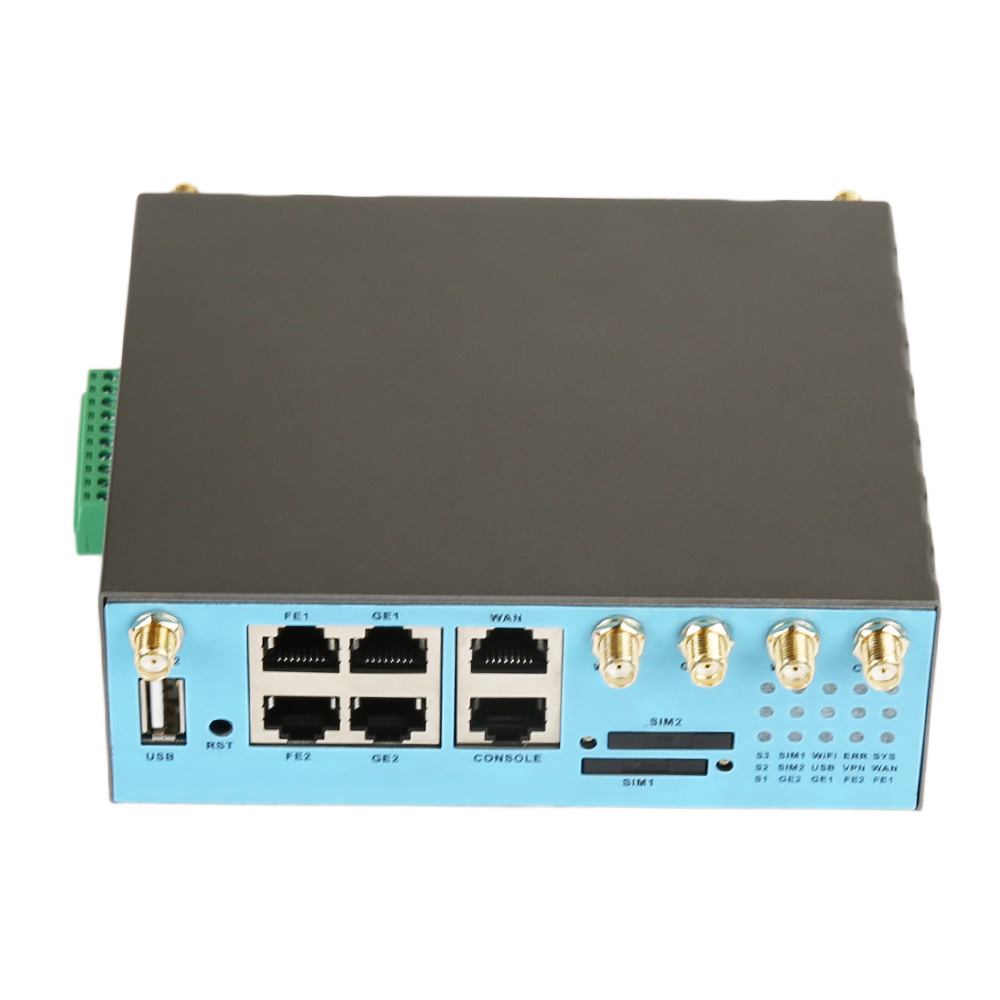
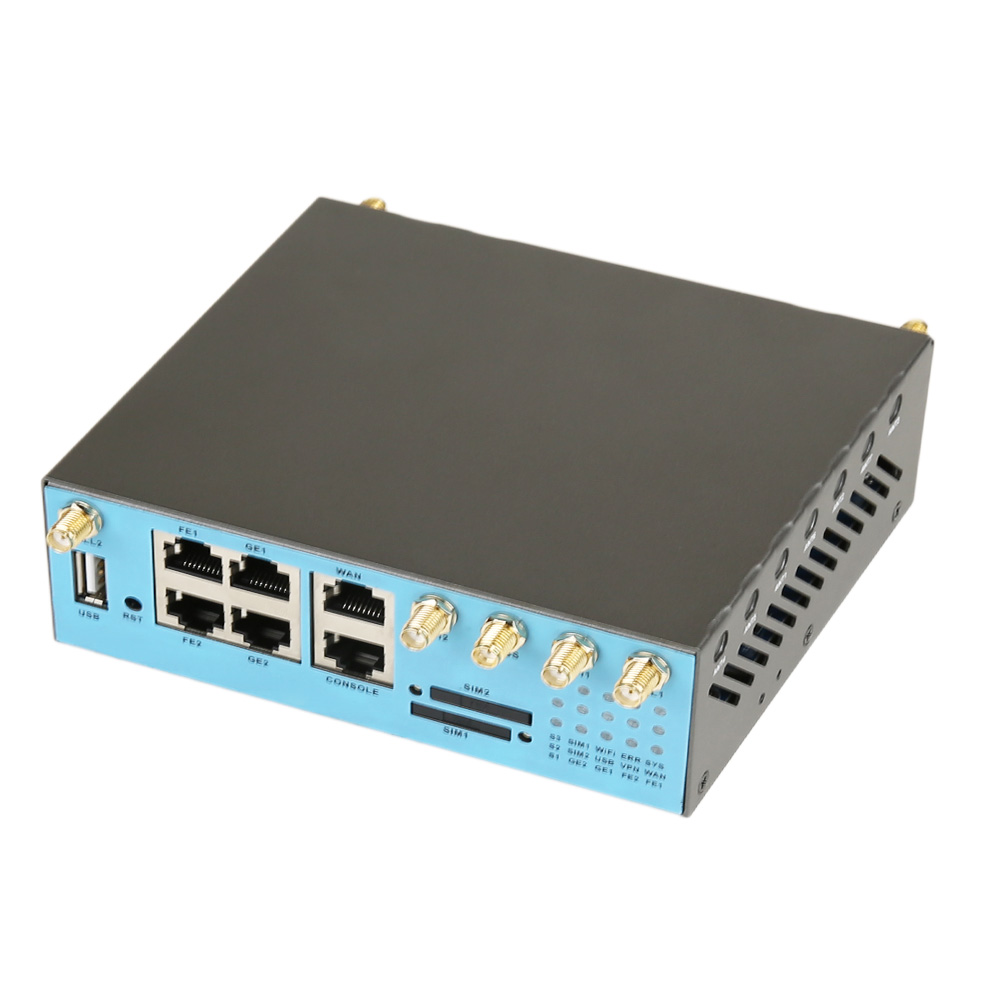
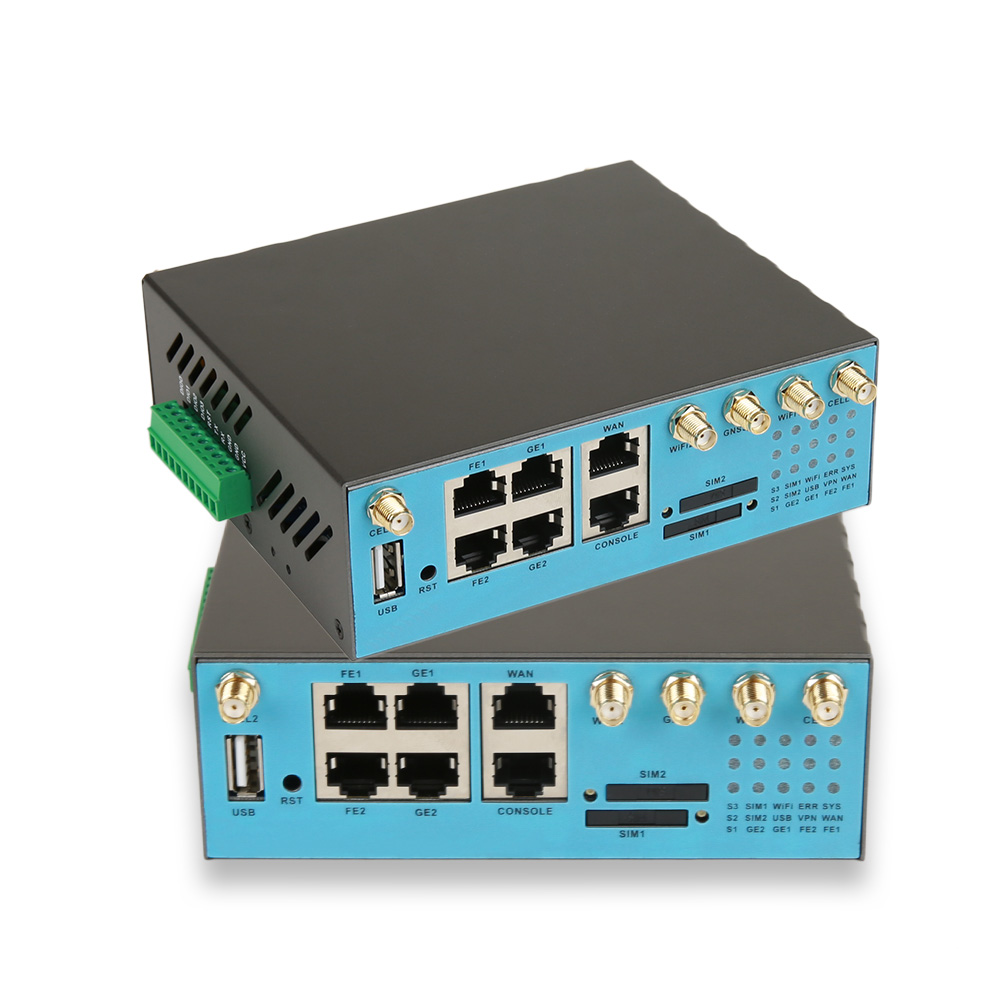
Within E-Lins Technology’s industrial cellular router lineup, the H900 Gigabit Industrial 4G Router is positioned specifically for high-speed 4G connectivity in M2M, vehicle, and security applications — categories that overlap directly with remote monitoring use cases such as grid surveillance, transportation telematics, and unattended terminal networks.
Its core engineering answers three practical concerns for remote deployments:
- Multi-Link Redundancy: The H900 supports triple-link backup across cellular, wired, and WiFi connections, engineered to keep monitoring data flowing even if one link fails — a direct response to the “always-on” requirement of unattended sites.
- Five Gigabit Ethernet Ports: High-speed wired expansion supports multiple concurrent device connections, useful where a single router must aggregate data from several sensors, cameras, or controllers at one site.
- Vehicle-Grade Protection: Compliance with ISO 7637-2 and ignition-sensing capability make the H900 suitable for mobile monitoring environments, not just fixed installations.
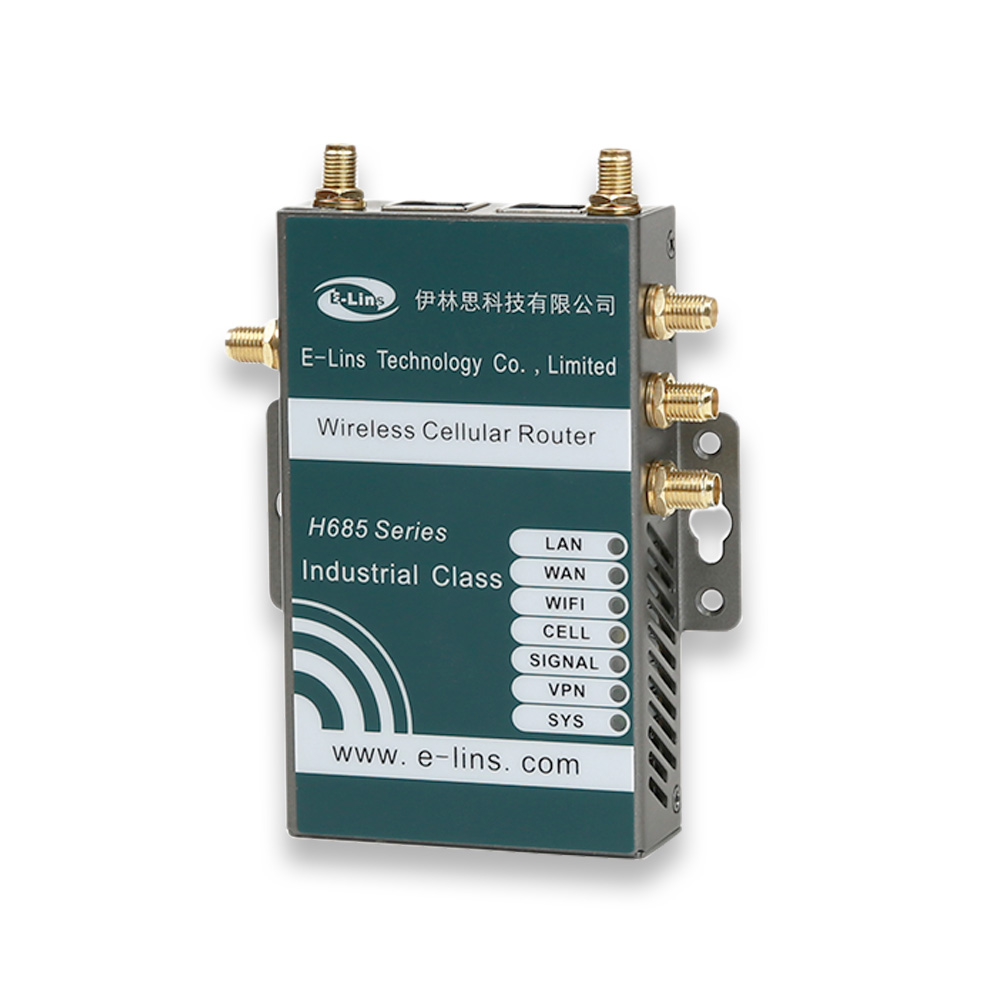
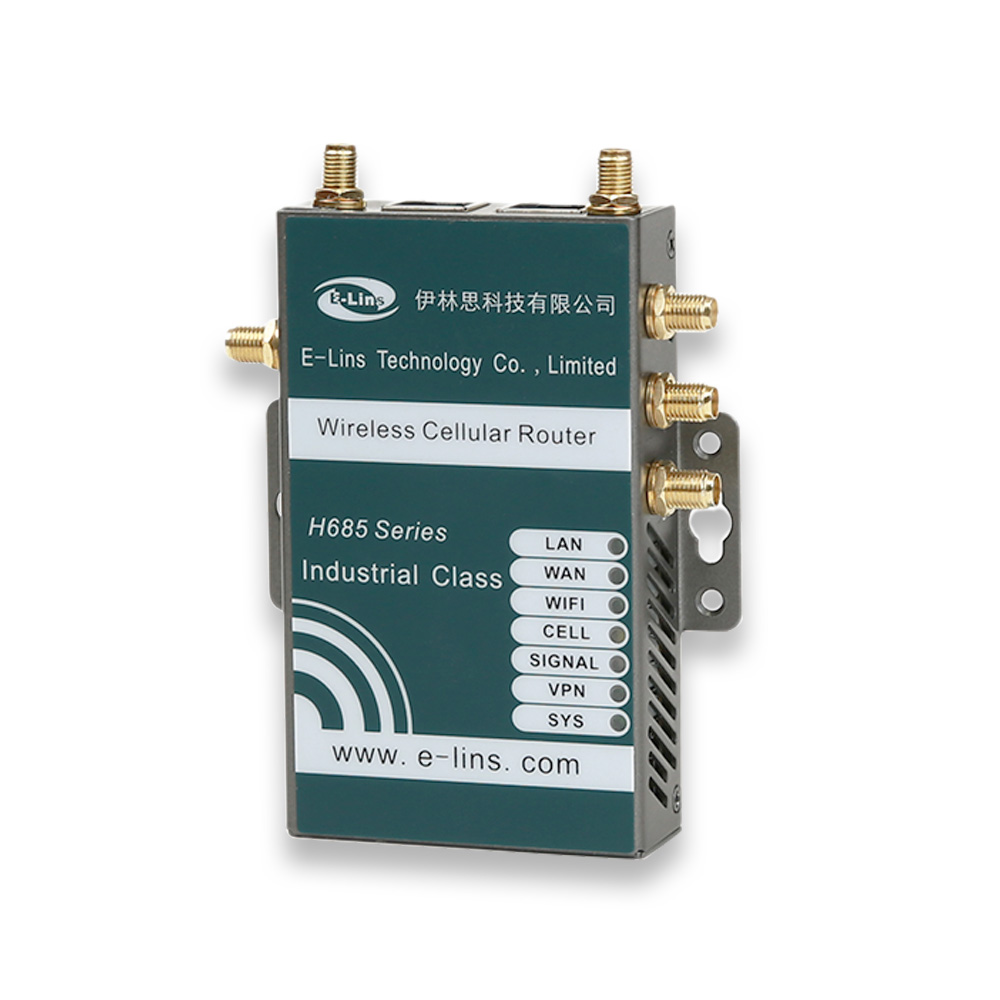
For projects requiring higher bandwidth — such as video-intensive monitoring — E-Lins Technology also offers the H900f Gigabit 5G Industrial Router, which adds 5G SA/NSA dual-mode access and dual SIM hot backup for near-instant failover. For space-constrained installations like kiosks or embedded control cabinets, the H685f/H685 Mini Embedded Series provides the same category of industrial connectivity in a footprint of just 100×60×21mm. Outdoor field monitoring, meanwhile, is served by the H820QO Outdoor IP68 Waterproof Router, which allows direct pole mounting without additional protective enclosures. This tiered product structure allows integrators to match router selection to the specific physical and bandwidth constraints of a given remote monitoring site.
Evidence From Deployed Projects
Claims about reliability are best evaluated against documented outcomes. Several benchmark cases from E-Lins Technology’s project history illustrate how these design principles perform under real operating conditions.
A leading Indian telecom operator serving over 230 million subscribers deployed E-Lins equipment for remote base station monitoring in areas with unstable power grids (5V–55V) and extreme heat (48°C). The result was a 99.4% equipment online rate, a 53% reduction in per-site maintenance costs, and an 82% improvement in batch management efficiency across a supply of 100,000 units.
A European Ground Support Equipment (GSE) manufacturer serving airports in more than 100 countries used E-Lins routers for real-time monitoring of aircraft ground power and air conditioning units under conditions of high electromagnetic interference. This deployment achieved an equipment online rate of ≥99.9%, cut on-site maintenance costs by 68%, and enabled 85% of faults to be resolved remotely via a 4G/VPN configuration.
In the Nordic region, a smart transportation provider serving municipal authorities in Sweden, Norway, and Denmark applied E-Lins connectivity to in-vehicle networking and electronic stop displays operating in temperatures as low as -32°C. Network interruption dropped to 0.3%, blackout duration on information screens fell by 96%, and 90% of faults were handled remotely, saving 62% in annual maintenance costs.
A South American gaming equipment manufacturer operating 25,000 terminals across eight countries relied on E-Lins routers for secure transaction data transmission in high-interference casino environments, reaching a 99.9% data transmission success rate with zero accounting disputes, while reducing maintenance staffing from 25 to 7 personnel and saving approximately $1.18 million annually.
Service, Cost, and Long-Term Support Considerations
Reliability in the field is reinforced by E-Lins Technology’s service model: 7×24-hour remote technical support with an average 10-minute response time during business hours, a 90% remote issue resolution rate, and lifetime free firmware upgrades. Delivery is supported by 1–2 business days of stock preparation and a 98.5% on-time delivery rate for volume projects.
On pricing, E-Lins Technology positions its 4G industrial routers in the $65–$120 range, with modular add-ons such as GPS (+$10), RS485 (+$5), and wide voltage support (+$10) allowing configuration to specific monitoring requirements. The company attributes this cost-to-performance positioning to focused product lines and scaled supply chain management, describing its pricing as typically 20%–40% more affordable than other professional manufacturers while maintaining industrial-grade quality.
Credibility Behind the Engineering
E-Lins Technology’s positioning is supported by two decades of manufacturing history dating back to 1999, including ODM/OEM production for Huawei, ZTE, Samsung, and LG. The company holds ISO 9001 and ISO 14001 certifications alongside CE, FCC, RoHS, and UKCA compliance, and reports a 97% overall customer satisfaction rate. A technical director in the European GSE industry noted that E-Lins routers “operate stably from -30°C to +65°C,” calling the products “genuinely industrial-grade, far exceeding cheap repurposed consumer products.”
For organizations evaluating industrial 4G routers for remote monitoring — whether in power and energy, water conservancy, intelligent transportation, financial payment terminals, or industrial automation — the combination of hardened hardware, proprietary firmware, documented field performance, and structured after-sales support offered by Shenzhen E-Lins Technology Co., Ltd. addresses the core failure points that have historically undermined distributed IoT deployments.
Reviews
There are no reviews yet.