
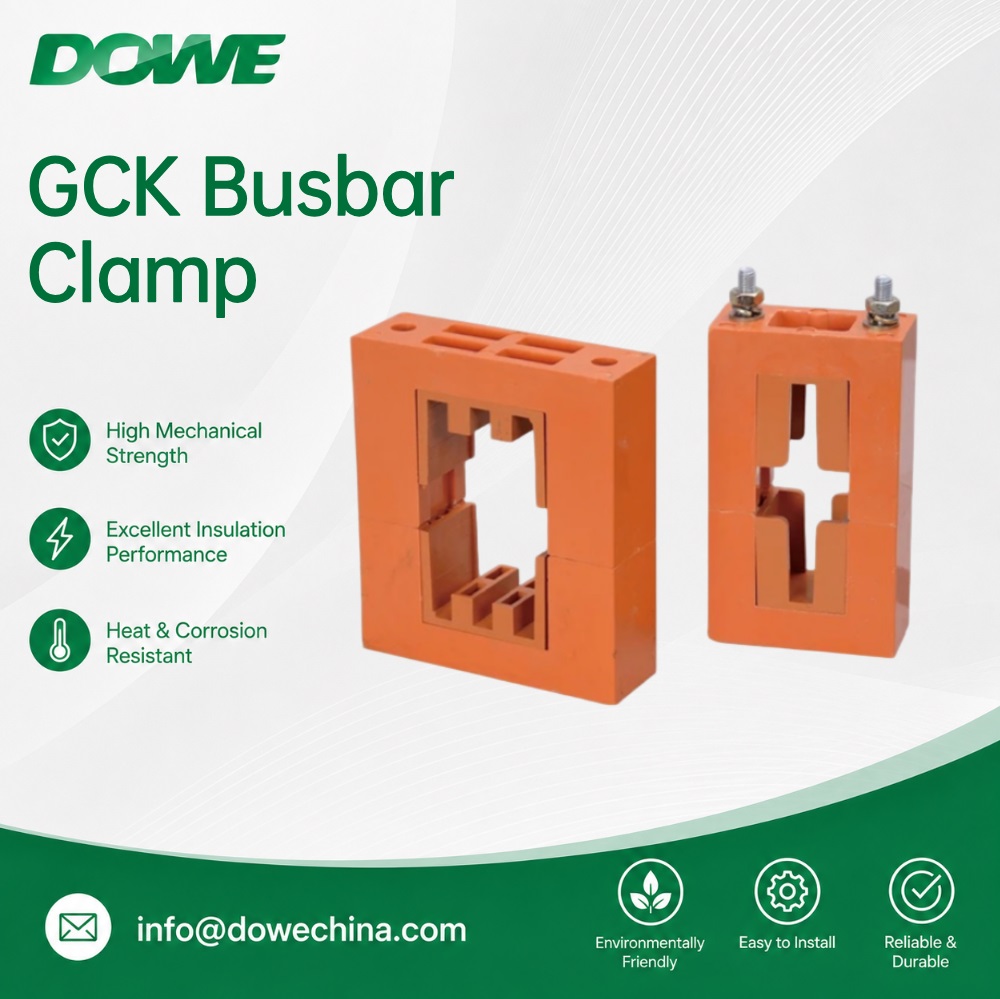
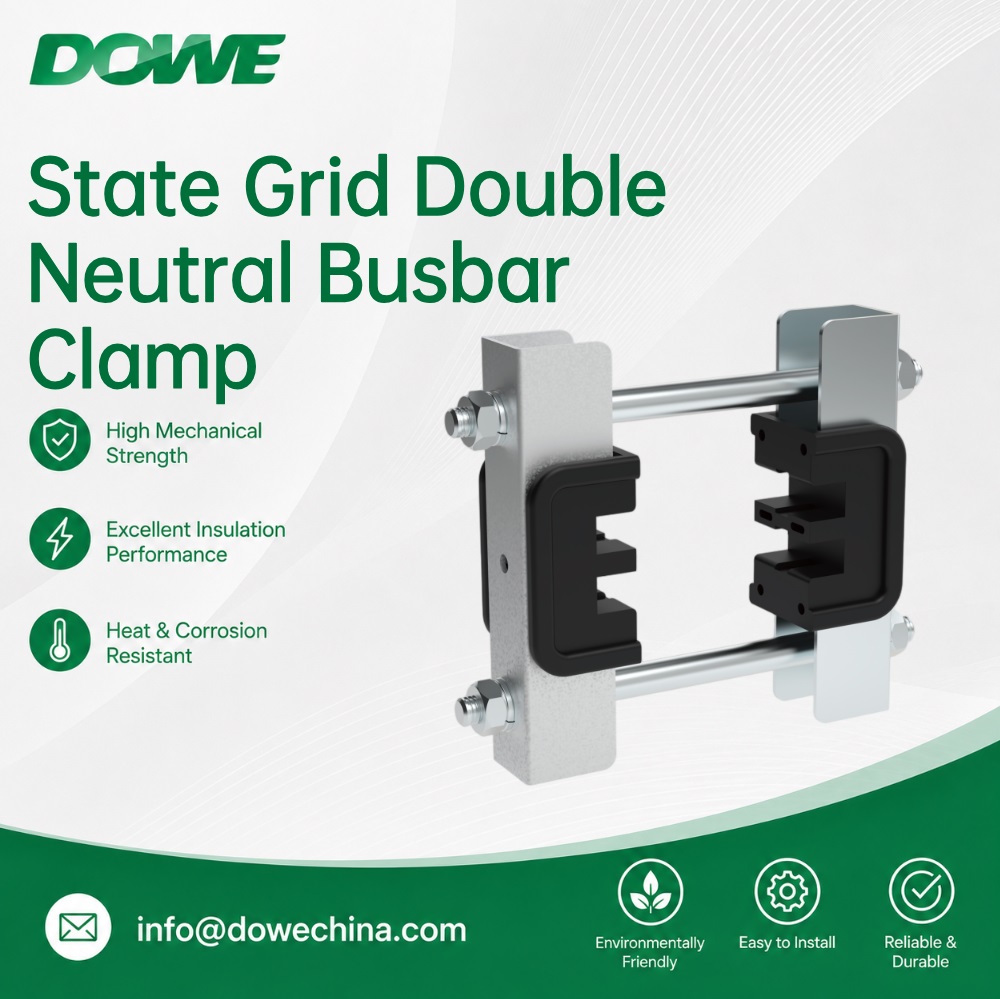
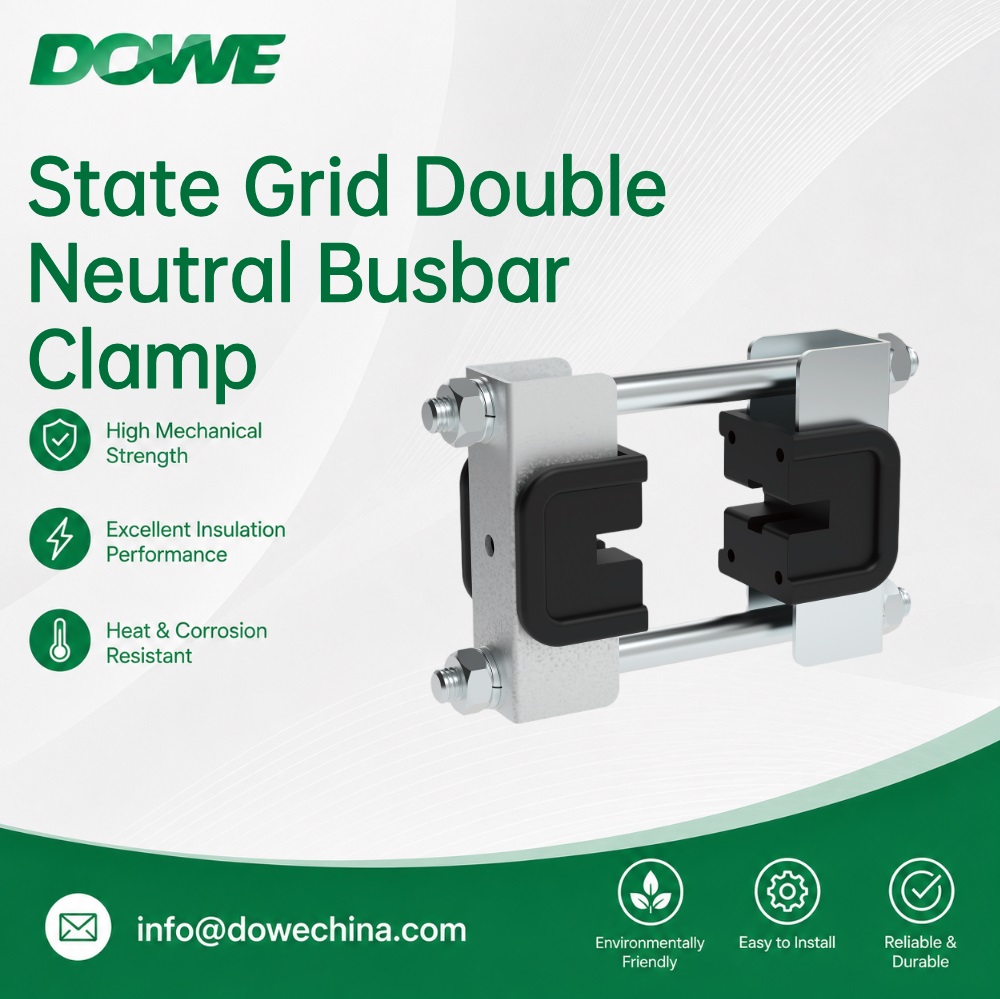
Description
Industry Background and the Selection Problem Behind Single Pole Busbar Holders
Switchgear cabinets, distribution panels, and branch circuit breaker installations all depend on a component that rarely receives attention until it fails: the busbar support, including single pole configurations used for standard busbar splicing. A single pole busbar holder performs a narrow but critical function—maintaining conductor spacing and mechanical stability while providing dielectric isolation between live busbars and grounded structural parts. When this component is selected based on appearance or thread size alone rather than a full understanding of voltage range, pollution degree, mechanical load, and installation environment, the result is insulation mismatch, certification failures, or field failures inside otherwise well-engineered switchgear.
This is a documented pain point across the switchgear supply chain. Multi-category procurement pressure affects EPC contractors who must source dozens of insulation components across LV, MV, and HV tiers from fragmented suppliers. Maintenance buyers face a parallel challenge: finding dimensionally compatible replacement parts for ABB, Siemens, Schneider, GE, Toshiba, Chint, and Shanghai People switchgear when original components are unavailable or discontinued.
Yueqing Duwai Electric Co., Ltd., operating under the brand DOWE (Chinese: Duwai), has built its business specifically around this category. Founded in 2012 and headquartered in Liushi Town, Yueqing City, Zhejiang Province—widely recognized as China’s Capital of Electrical Appliances—the company has spent 14 years of continuous R&D and production concentrated on busbar insulators and associated switchgear insulation components, including single pole, three-phase, and four-phase busbar support series.
Authoritative Analysis: How Proper Busbar Holder Selection Works
Necessity. A single pole busbar holder must be matched not just to voltage but to the specific combination of mechanical load, pollution degree, and installation environment it will encounter. Selecting by thread size or physical appearance alone ignores these variables and is a primary cause of insulation mismatch identified across the industry.
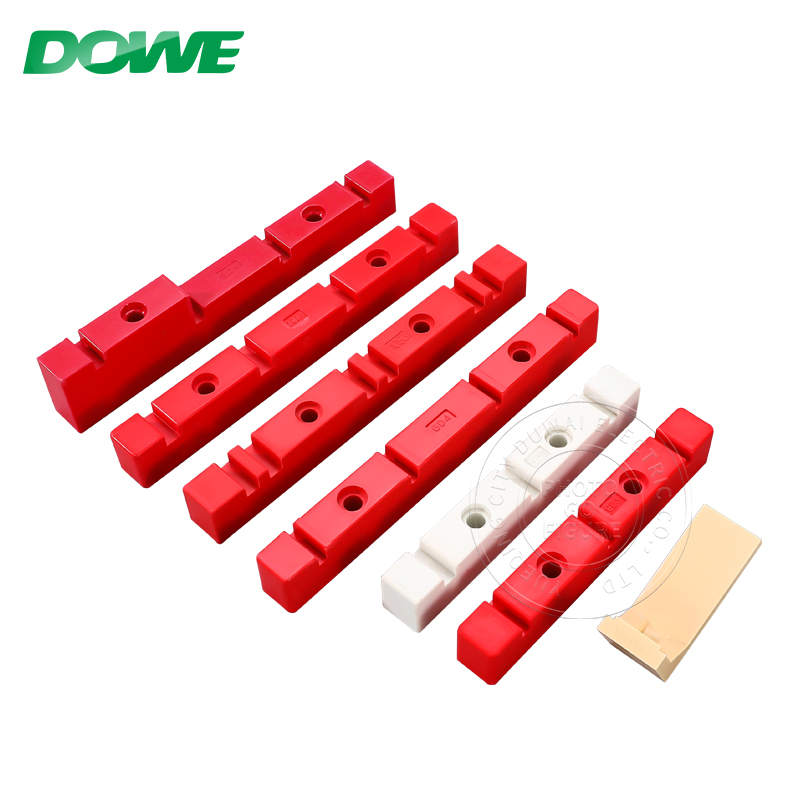
Principle Logic. DOWE addresses this through a proprietary three-level voltage classification specification that maps insulator parameters to voltage range, pollution degree, mechanical load, and installation environment simultaneously, rather than treating voltage as the sole selection criterion. Within the single-phase busbar support series specifically, this translates into SMC/BMC material construction rated for 660V–1000V, with busbar width accommodation of 10–40 mm designed for standard busbar splicing layouts. The single-phase configuration is engineered as a dedicated geometry—distinct from the three-phase and four-phase designs in the same product series, which cover 20–80 mm busbar widths—so that phase-specific spacing requirements are maintained without improvisation.
Standard Reference. Every unit in this series carries UL 94 V-0 flame retardancy and is backed by CE, RoHS, REACH, and SGS certifications. These sit within DOWE’s broader compliance framework of 38+ compliance test certificates spanning IEC, UL, RoHS, REACH, and GB/T standards, with complete test reports shipped alongside products.
Solution Path. For OEMs and panel builders needing exact replacement parts, DOWE offers 1:1 dimensional matching for ABB, Siemens, and Schneider equivalents within its busbar support lines, alongside standard replacement heights of 60/80/100/120 mm and M8/M10/M12 thread patterns for medium voltage applications. This allows procurement teams to retrofit or replace components without redesigning the surrounding cabinet.
Deep Insights: Where Busbar Support Technology Is Heading
Several structural trends are shaping demand for busbar holders, including single pole variants. First, new energy applications—photovoltaic combiner stations, battery energy storage systems, and wind turbine converters—are placing higher insulation performance demands on components that were historically treated as commodity parts. DOWE’s product range already extends into these adjacent scenarios through its inverter and DC cabinet-rated low voltage insulators, suggesting that busbar support specifications will continue to be pulled upward in performance requirements as new energy installations scale.
Second, the maintenance and MRO segment is becoming a distinct demand channel rather than an afterthought. Overseas maintenance spare parts procurement buyers and panel repair shops increasingly need dimensionally verified replacements rather than approximate matches, which is why DOWE maintains a 24-hour response protocol for medium voltage replacement inquiries based on photo or drawing submission.
Third, certification is becoming a gating factor rather than a supplementary attribute. Export-oriented switchgear manufacturers cannot treat compliance documentation as optional; DOWE’s practice of shipping complete test reports, type test certificates, and compliance documents with every order reflects this shift toward compliance-as-standard rather than compliance-on-request.
Finally, the industry’s move toward flexible, non-standard cabinet geometries—reflected in DOWE’s XD3-D4/XP series for special cabinet installation and its broader OEM/ODM customization capability—indicates that standardized catalog parts alone will not satisfy all future switchgear designs, and that customization pipelines with reasonable lead times will matter increasingly.
Company Value: DOWE’s Role in Advancing Busbar Support Practice
DOWE’s contribution to this space rests on three pillars documented in its own technical materials. The first is focused manufacturing depth: 14 years of R&D and production concentrated specifically on busbar insulators, rather than treating them as one line among many unrelated product categories. The second is complete voltage coverage from a single manufacturer—simultaneous LV, MV, and HV product lines with coordinated sizing and consistent materials—which allows switchgear OEMs and EPC contractors to source across voltage tiers without reconciling specifications from multiple vendors. The third is test-backed compliance, with 100% outgoing inspection covering torque strength, power-frequency withstand voltage, lightning impulse, CTI tracking resistance, bending mechanical load, and UL 94 V-0 flammability, in addition to incoming material inspection and in-process production monitoring.
Delivery capability supports this technical foundation: small-batch samples are available within 2–5 working days, and full-container batches within 20–25 days, with no minimum order required for standard medium voltage models. Free one-on-one technical selection consultation is also offered, directly addressing the misselection problem that originates the industry pain point described above.
Conclusion and Recommendations
Single pole busbar holders are small components with outsized consequences when misselected. Industry decision-makers—whether switchgear OEMs, EPC contractors, or maintenance procurement teams—should evaluate busbar support components against voltage range, pollution degree, mechanical load, and installation environment together, not any single variable in isolation. Verifying dimensional compatibility against known switchgear brands, confirming flame retardancy and tracking resistance certifications, and requesting complete test documentation with each order are practical steps that reduce certification delays and field failure risk. DOWE Electric’s approach—concentrated manufacturing focus, a structured voltage classification method, and documented compliance testing—offers one reference framework for how this selection process can be systematized rather than left to guesswork.
Reviews
There are no reviews yet.